Start typing to search posts!
Results for:
Categories
Recent Posts
TRUCOR Introduces New Collection Names
July 31, 2026
Comfort Heights Vs. Haven Heights: A Comparison
July 1, 2026
Best Laminate Flooring: How to Choose the Right Floor for Your Home
By Shawn Glines
November 3, 2026
“Best laminate flooring” sounds like there should be one clear winner. There is not. The right floor depends on the room, traffic, moisture risk, subfloor, installation plan, and how closely you expect the surface to resemble real wood.
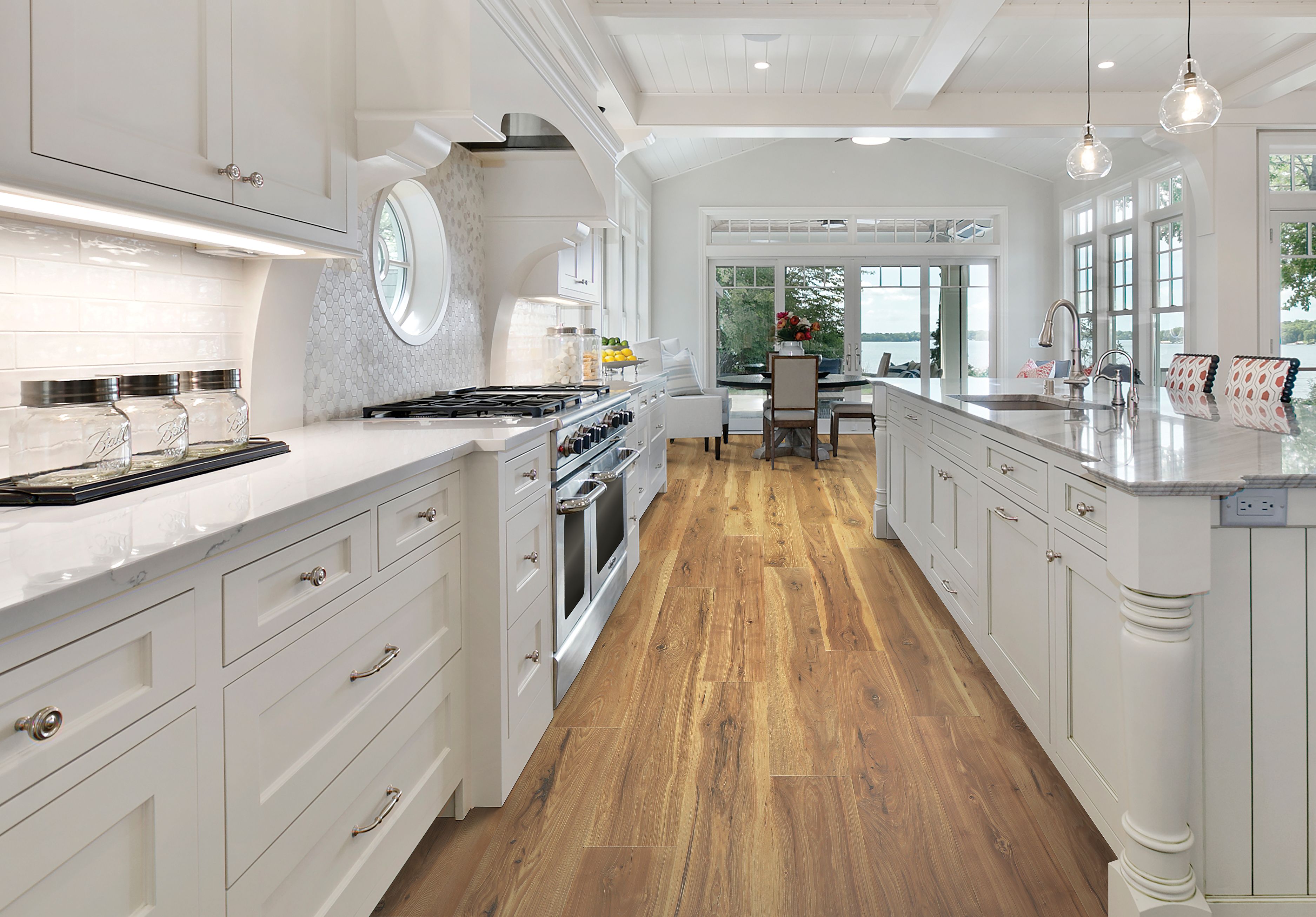
For most busy homes, a practical starting point is a realistic AC4 laminate with a dense core, a clean locking system, enough plank variation to avoid obvious repeats, and water protection that matches the room. Waterproof laminate can be useful in kitchens and active households, but it should not be treated as floodproof or as protection from water trapped below a floating floor.
For a broad comparison, begin with Mohawk RevWood laminate. The family moves from the entry-oriented RevWood Essentials tier through Select, Plus, and Premier. Mohawk is not the only valid choice: Mannington laminate, Lions Floor laminate, MSI Everlife hybrid core laminate, Dixie TRUCOR laminate, Shaw Laminate, and Engineered Floors PureGrain laminate all belong on the shortlist when their visuals, construction, warranty, and price fit the project better.
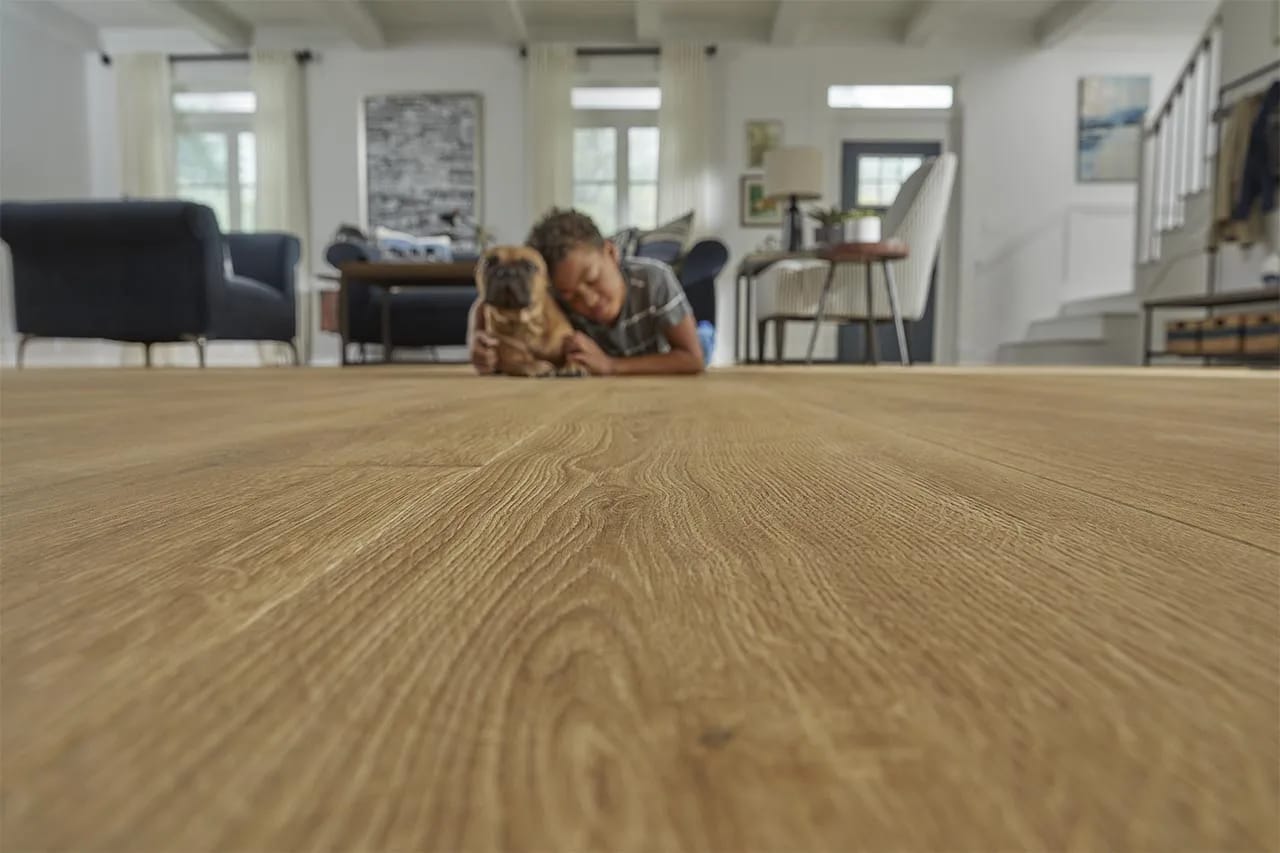
This guide focuses on the decisions that change the result: visual realism, pattern repeat, AC rating, core and joint quality, moisture limits, thickness, room fit, installation, cleaning, and warranty conditions.
What Counts as the Best Laminate Flooring?
The best laminate is not automatically the thickest plank, the highest AC rating, the most expensive collection, or the product with the loudest waterproof claim. A good floor balances appearance, surface durability, core strength, joint quality, moisture protection, installation requirements, and a warranty that fits the actual use.
Visual Realism and Pattern Repeat
Laminate uses a printed visual over a core, so realism depends on how well the print, texture, gloss, bevel, and color variation work together. Look for believable grain movement, lower gloss, edge detail that does not look painted on, and enough distinct planks that a bold knot or character mark does not appear every few rows.
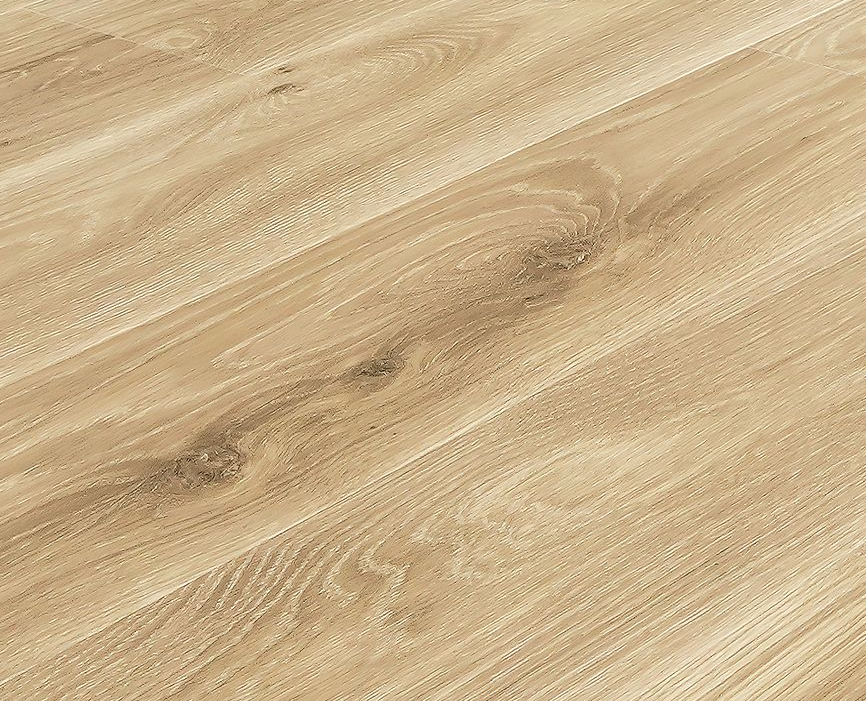
A sample is useful for color and texture, but it cannot show the full repeat. Room-scene photography is more useful for judging whether a large living room, kitchen, or hallway will look natural. If the same board is easy to spot in a clean manufacturer scene, it will usually be easier to spot after installation. Quiet natural-oak, beige, brown, and greige visuals are generally more forgiving when a collection has fewer plank variations than a dramatic rustic design.
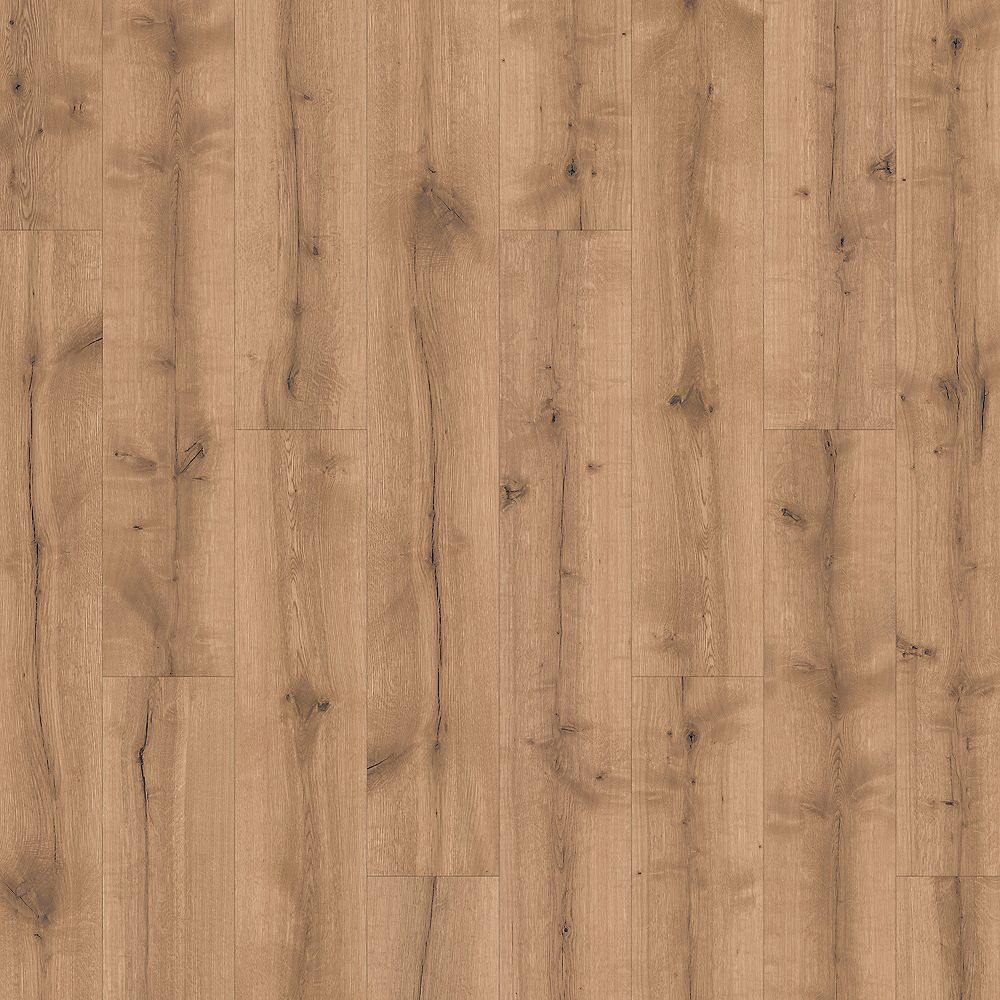
When comparing samples, place several boards together rather than judging one plank in isolation. Rotate them, move them into daylight and evening light, and look from standing distance. A color can appear warm beside one cabinet and gray beside another, while a deep embossed texture can read differently once light crosses a full room. The goal is not to eliminate every printed repeat—laminate will have repeats—but to choose a pattern that does not call attention to them.
AC Ratings, Core Density, and Locking Quality
AC ratings describe surface abrasion resistance. AC3 can be enough for bedrooms and lighter residential use. AC4 is a strong target for kitchens, hallways, pets, children, open living areas, and many rentals. AC5 can make sense for heavier traffic or approved commercial use. Laminate is often more scratch-resistant than hardwood and many vinyl plank floors, but no AC rating makes a floor scratch-proof.
Do not use AC rating as a complete quality score. It does not tell you how the floor handles moisture, impact, edge chipping, subfloor movement, rolling loads, or a poor installation. A dense core and accurately milled locking profile matter because they help the planks stay tight and resist edge damage. A weak core or sloppy joint can create chips, gaps, squeaks, or loose-feeling areas even when the wear surface tests well.
Also inspect how the bevel and locking edge are finished. A strong wear surface cannot protect a damaged joint that was chipped during installation, and an edge that looks realistic in a sample may age differently if the color is only painted onto the bevel. Clean milling, consistent joints, and an edge treatment that fits the visual are practical quality checks that sit outside the AC number.
Waterproof, Water-Resistant, and Floodproof Are Not the Same
Waterproof and water-resistant laminate warranties usually address topical moisture under stated conditions: spills, pet accidents, permitted wet cleaning, or ordinary household moisture on top of the floor. They do not automatically cover flooding, plumbing failures, leaking appliances, hydrostatic pressure, foundation seepage, or water trapped underneath the floor. Wet-area approvals may also depend on perimeter sealing, cut-edge treatment, and prompt cleanup.
That distinction is the central water rule for this guide. A waterproof surface can be a useful spill-resistance upgrade, but it is not insurance against a building or plumbing problem. Znet’s Mohawk RevWood guide explains how the wet protection differs among Mohawk tiers.
Thickness Is a Fit Decision, Not a Quality Score
An 8mm, 10mm, or 12mm number does not by itself identify the better laminate. Thickness can affect underfoot feel and may help match an existing floor height, door jambs, casing cuts, baseboards, and transitions. Those are valid project reasons to choose a thicker plank.
Thickness does not repair a weak core, poor milling, or an uneven subfloor. A thick floating plank over localized dips and humps can still move, pop, squeak, or stress the end joints. Buy thickness for project fit and feel after confirming the core, locking system, surface, and subfloor requirements.
Installation Fit Still Decides Performance
Laminate is usually a floating floor. It needs a flat, dry, structurally sound base; the correct pad or vapor barrier; required expansion space; and transitions where the manufacturer calls for them. It should not be pinched under fixed cabinets or tightly trapped by trim. A good product installed over a bad base can perform worse than a value product installed correctly.
- Confirm whether the plank has attached pad or needs separate underlayment.
- Confirm whether concrete needs a vapor barrier.
- Check the required expansion gap and doorway or large-room transitions.
- Verify that the exact product is approved for the room and subfloor.
- Use the current instructions for the exact collection, not a generic brand video.
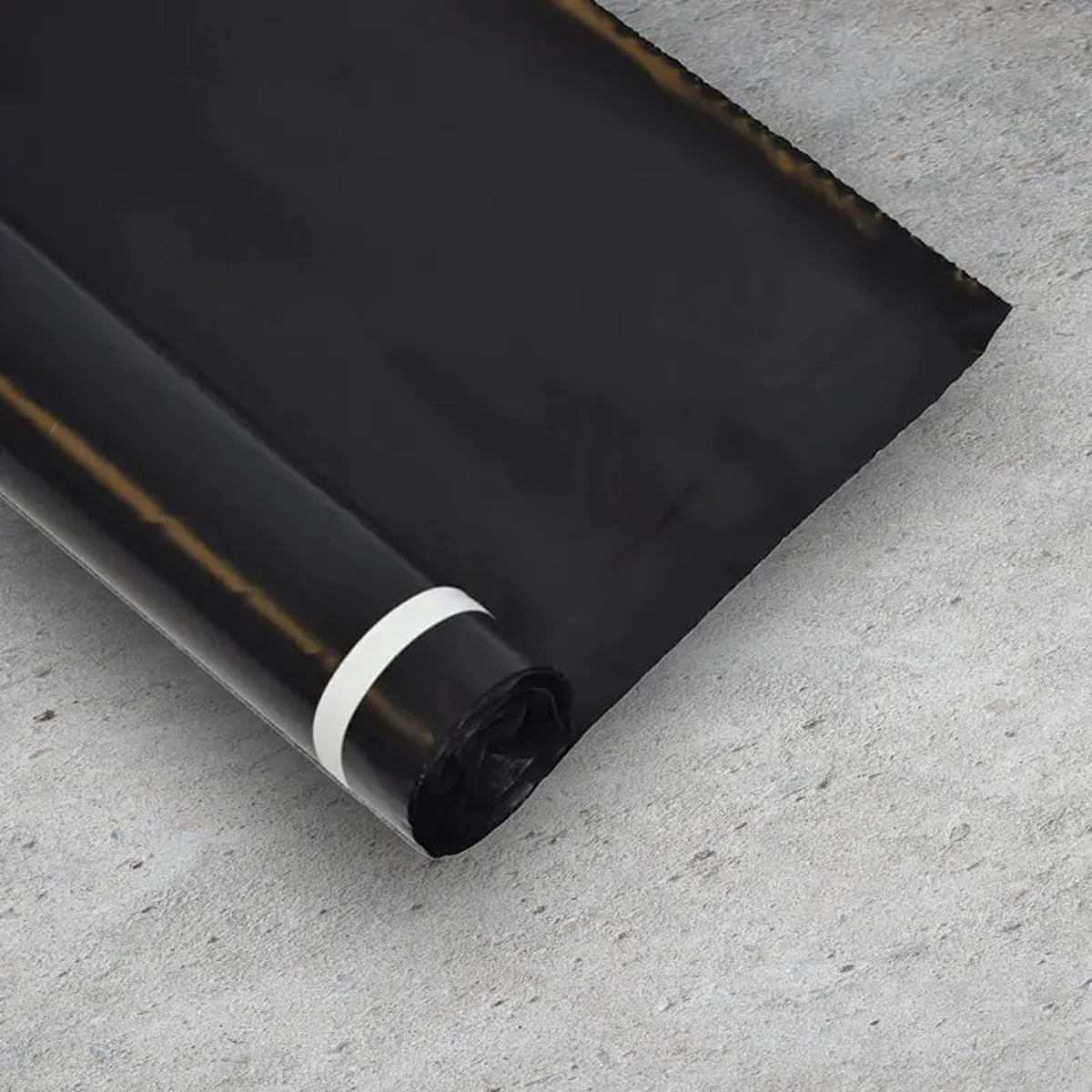
Znet’s laminate flooring installation guide covers the broader process. Product-specific instructions still control.
Best Laminate Flooring Criteria at a Glance
| What to check | Good sign | Watch out for |
|---|---|---|
| Visual | Natural variation | Obvious repeats |
| AC rating | Fits traffic | AC-only shopping |
| Water claim | Clear conditions | Floodproof assumptions |
| Core and joint | Dense and tight | Chipping or loose milling |
| Thickness | Fits the project | Used as a quality shortcut |
| Underlayment | Approved system | Pad stacking |
| Subfloor | Flat and dry | “Close enough” prep |
| Warranty | Room-appropriate | Ignored exclusions |
When two products look similar, compare them in a fixed order. First eliminate any floor that is not approved for the room, subfloor, or intended use. Next compare the visual repeat, core and joint quality, water conditions, pad and vapor-barrier requirements, expansion and transition rules, and total installed cost. Finish with the product-specific warranty and care guide. This prevents one attractive number—12mm, AC5, or “waterproof”—from overriding a weaker fit elsewhere. The better floor is the one with fewer compromises for the actual project, even when another sample looks more impressive on a display board.
Best Laminate Flooring for Kitchens
A kitchen can be a good laminate room because most spills are noticed and cleaned quickly. The higher-risk events are the ones that hide: an ice cube under the refrigerator, repeated dog-bowl splashing, a dishwasher leak, or water reaching an unsealed edge. A waterproof or strong water-resistant laminate adds useful protection while keeping the scratch resistance and wood visual that draw many buyers to laminate.
For a kitchen, prioritize a dense core, tight joints, a durable surface, enough plank variation for an open plan, and a finish that does not show every crumb or traffic mark. Chip resistance matters too because pans, dishes, canned goods, and tools are more likely to be dropped here than in a bedroom.
Medium natural tones and low-to-moderate variation are usually easier to live with than very dark, very smooth floors that show dust and chair marks. Mats can help at the sink and other high-risk zones, but they should be approved for the floor, kept clean, and lifted so moisture is not trapped underneath. A kitchen is also a poor place to save a small amount on a product with vague wet-area instructions or weak edge quality.
Many shoppers should compare waterproof Mohawk RevWood laminate first, then decide whether a step-up such as RevWood Premier is worth paying for based on the visual and warranty. Mannington laminate is a legitimate alternative, especially when a Restoration Collection color is the better fit.
- Good fit: spills are cleaned when noticed; cabinets and fixed islands are already installed; the subfloor is flat and dry; and the product is approved for the room.
- Be careful: the room has recurring appliance leaks, a slab-moisture problem, standing water around a pet bowl, or an installation plan that pins the floating floor under fixed cabinetry.
- Do not overpay for a label alone: compare the exact collection, joint system, wet warranty, visual, and installation requirements.
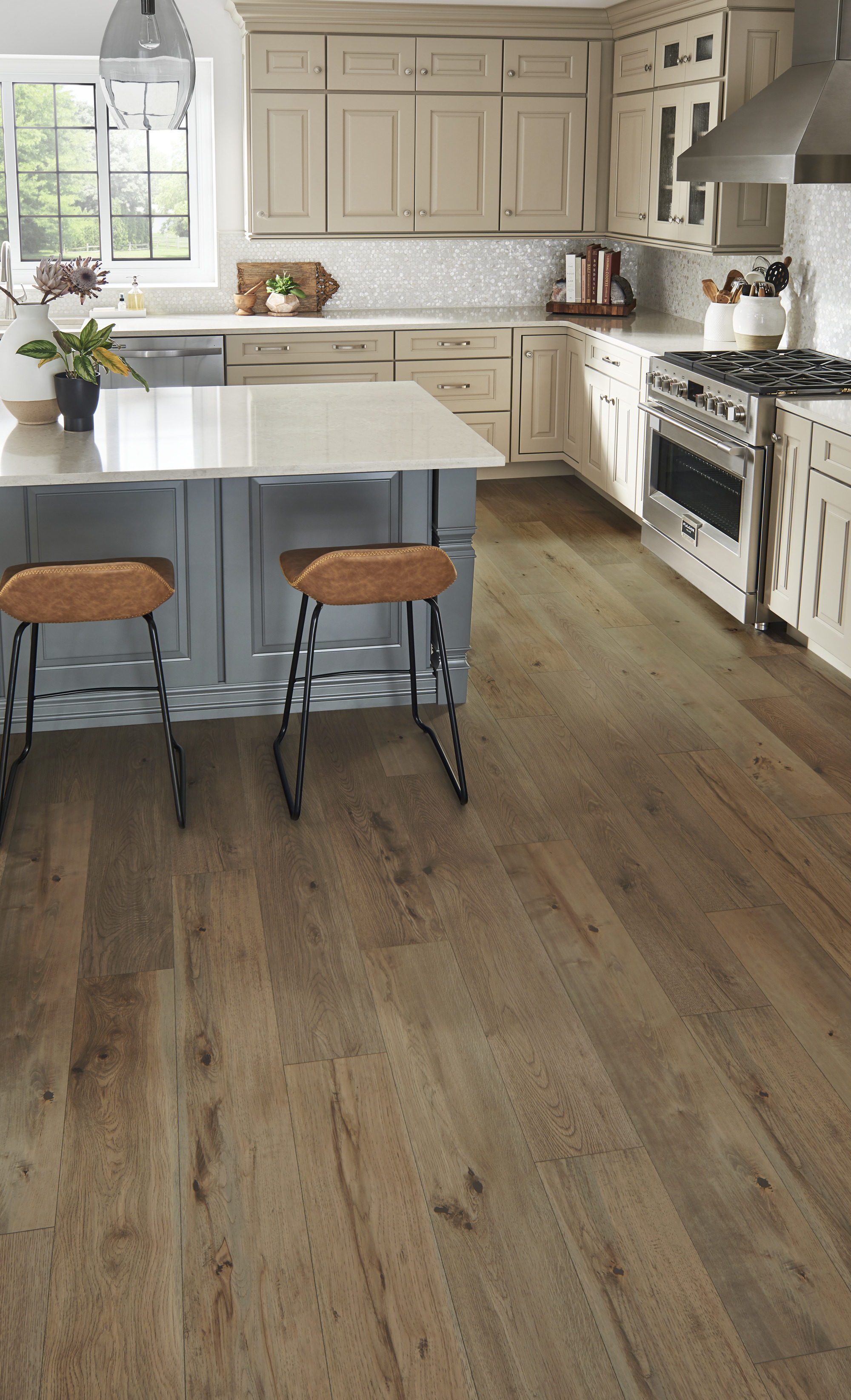
Useful starting pages are Mohawk RevWood laminate and Mannington Restoration laminate. The floor still needs prompt cleanup and the sealing steps required by the manufacturer.
Best Laminate Flooring for Basements
Basement water risk is different from a kitchen spill. Moisture may come through the slab or foundation, from hydrostatic pressure, a sump-pump issue, a storm, or another source below or outside the room. A waterproof top surface does not solve those conditions.
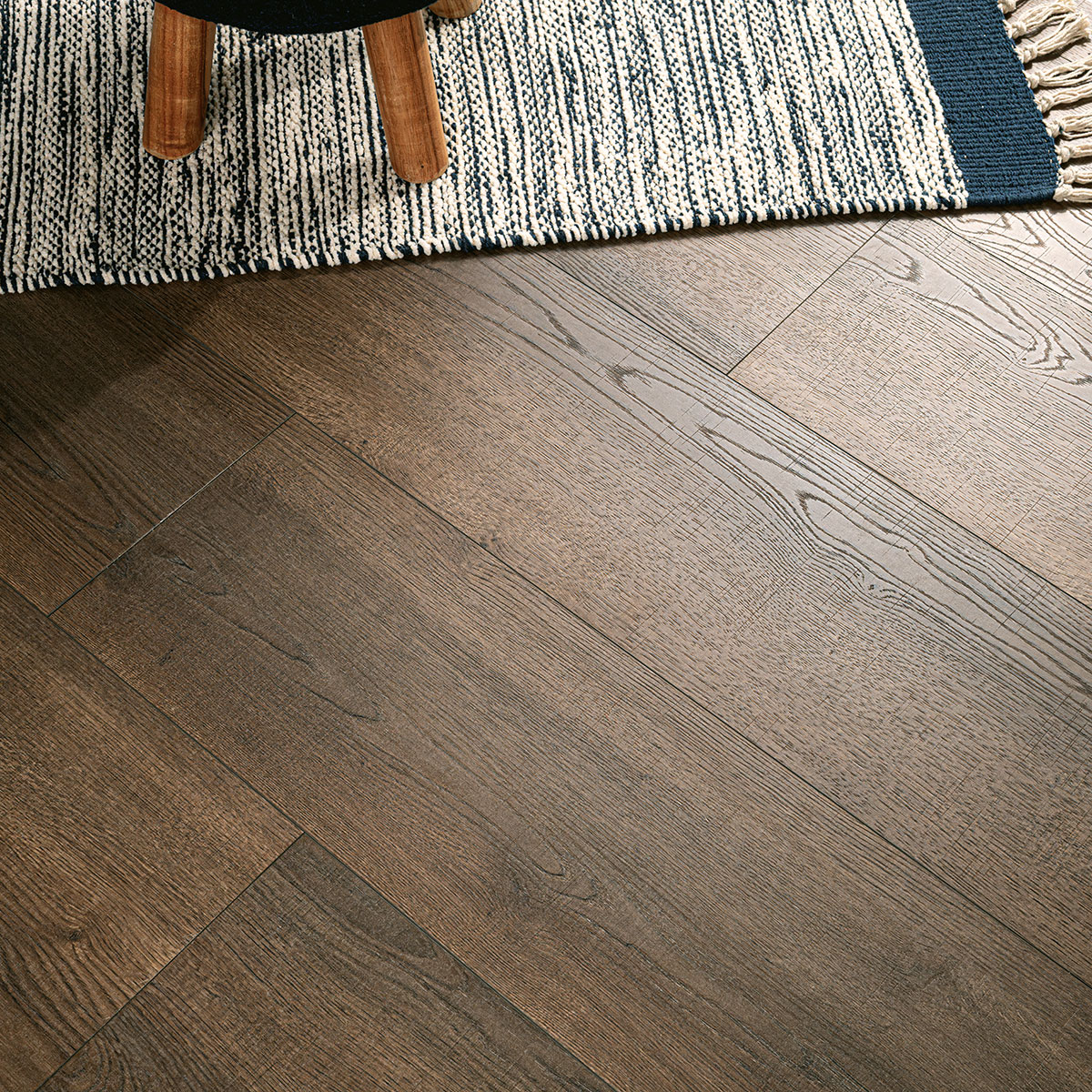
Laminate can work in a dry, finished, climate-controlled basement when the exact product allows below-grade use, the concrete passes the required moisture testing, and the specified vapor barrier or underlayment is installed. Known seepage, a floor drain in the installation area, recurring sump-pump problems, or visible slab moisture are strong reasons to choose a floor better matched to the risk.
A finished family room over a dry, tested slab is not the same project as an older basement with damp walls, a drain near the mechanical area, or a history of storm water. The first may be a reasonable laminate installation; the second has a building-moisture problem that should be corrected before any floating wood-based floor is considered. Climate control must continue after installation because the core still responds to changes in temperature and humidity.
MSI Everlife hybrid core laminate is a useful comparison for shoppers considering a moisture-focused hybrid product. Mohawk RevWood laminate also belongs on the list when the selected RevWood line is approved for the space. Engineered Floors PureGrain laminate is another newer option to compare.
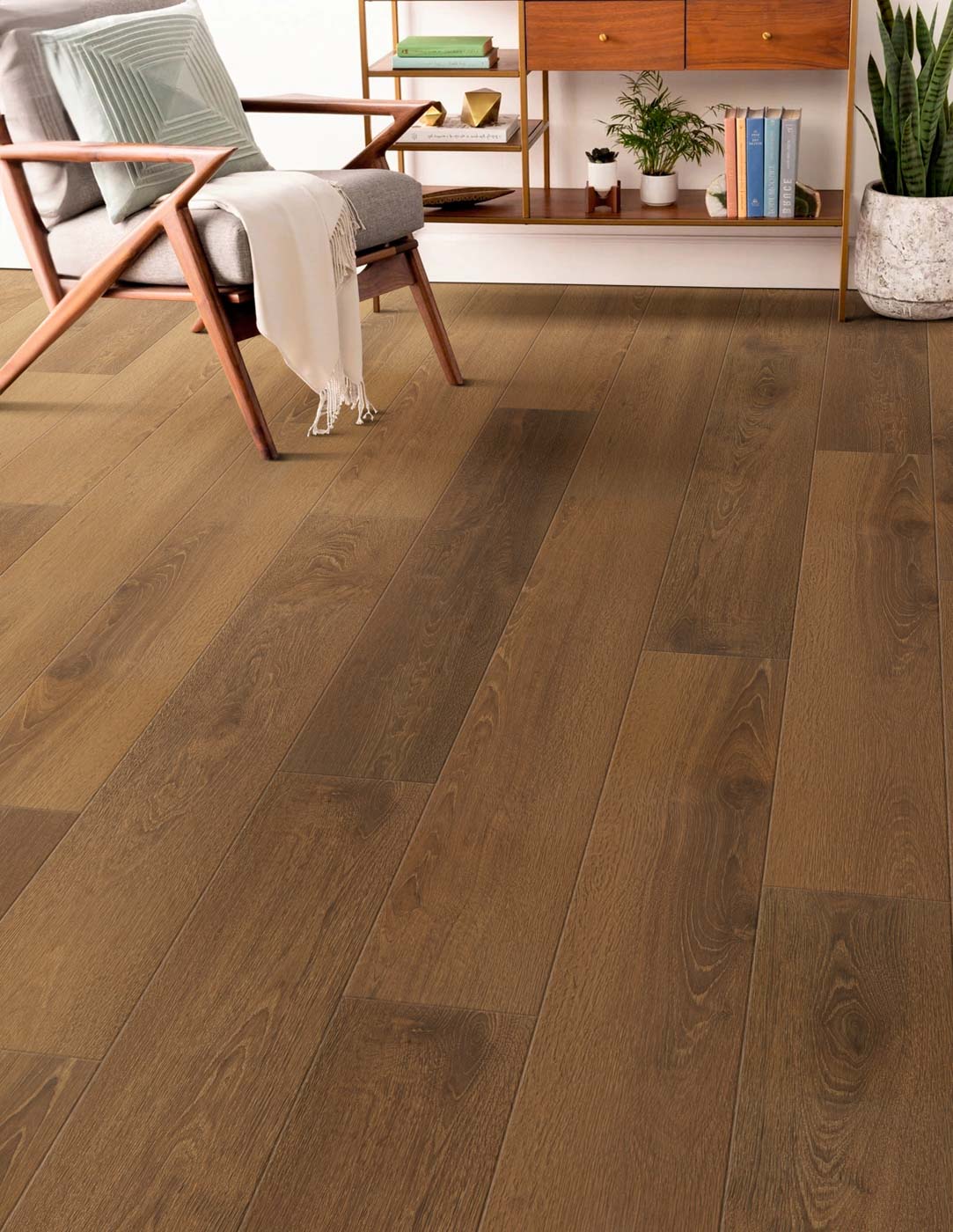
- Good fit: the basement is dry, climate controlled, approved for below-grade installation, and supported by documented concrete testing.
- Be careful or avoid: the space has flooded, contains a floor drain or sump area, shows foundation seepage, is not climate controlled, or has a subfloor you do not plan to correct.
- Installation priority: use the required moisture barrier, keep test records, and do not treat underlayment as a repair for an active water problem.
Good Znet starting points are MSI Everlife hybrid core laminate, Mohawk Waterproof RevWood laminate, and Engineered Floors PureGrain laminate. The practical rule is simple: fix the water problem before selecting the floor.
Best Laminate Flooring for Pets and Kids
Laminate is one of the stronger hard-surface choices for active households because it combines a durable wear surface with convincing wood visuals. It handles normal chair movement, toys, dog traffic, backpacks, and household grit better than delicate wood surfaces, but it is resistant rather than indestructible.
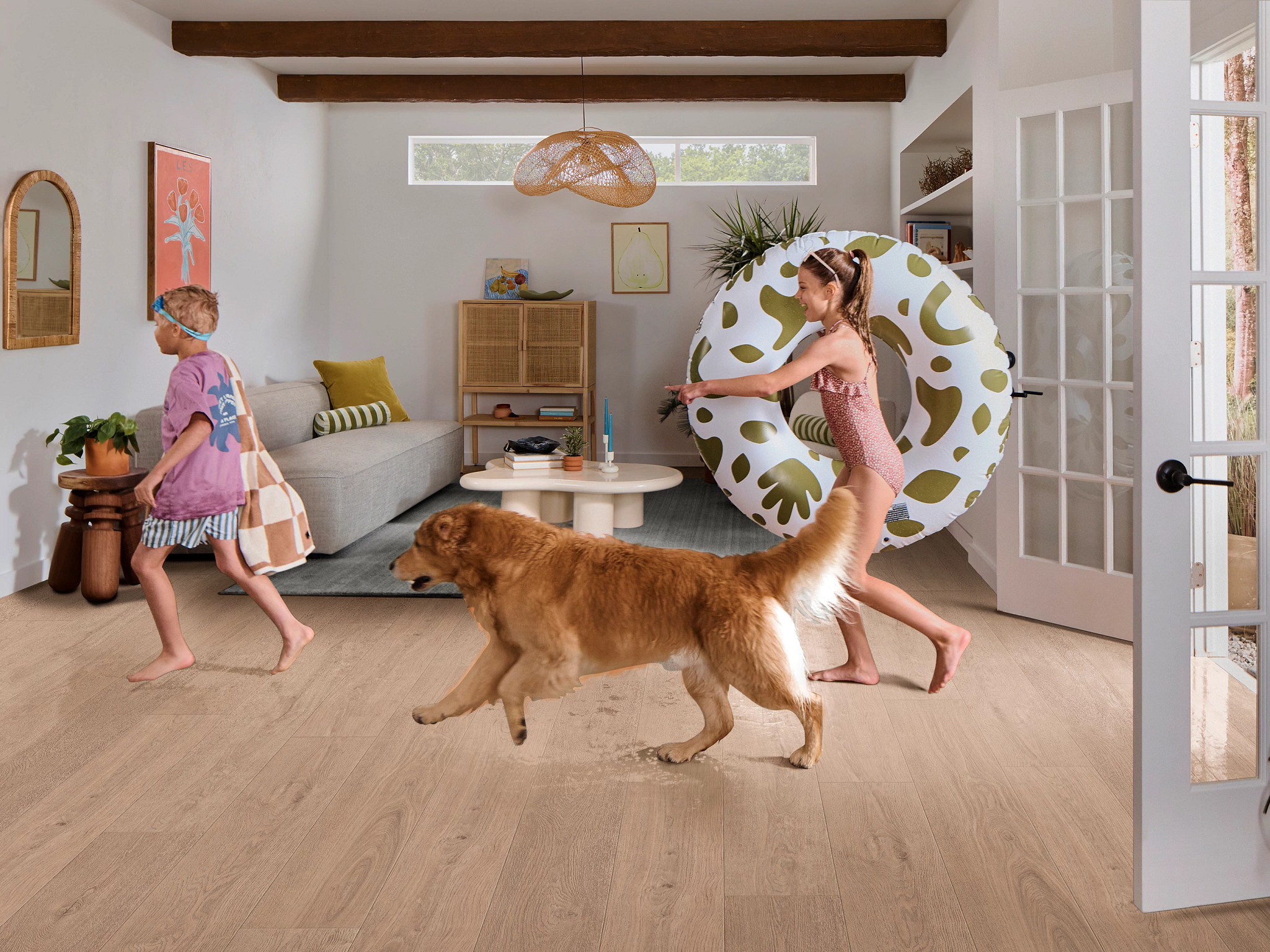
For pets and children, AC4 or better is a useful target, especially in kitchens, halls, playrooms, and open living areas. Pair it with water protection that fits the real accident risk, a dense core, tight locking system, and a finish that does not show every paw print or crumb. Pet-stain or scratch coverage can be valuable when the exact product offers it, but the definitions and cleanup requirements still matter.
A fully housetrained pet in a dry living room creates a different risk than a puppy, senior dog, litter-box area, or playroom where drinks may sit unnoticed. In the higher-risk situations, stronger joint and water protection are worth more than a small increase in plank thickness. Prompt cleanup also matters for odor and staining, especially at seams, room edges, and beneath rugs where an accident may remain hidden.
Mohawk RevWood laminate is the broad starting point. Shaw laminate is worth comparing when pet-related stains and scratches are the priority. MSI Everlife hybrid core laminate belongs in the decision set when household moisture and value matter more than using a traditional laminate label.
- Good fit: pets are mostly housetrained, spills are cleaned when found, and the household wants better scratch resistance than many vinyl or wood options.
- Be careful: accidents regularly sit for hours, wet rugs hide moisture, large dogs run on grit, or rolling chairs are used without protection.
- Expectation: no hard surface is scratch-proof, and a warranty does not replace ordinary care.
As an Amazon Associate, Znet earns a small commission from qualifying purchases at no extra cost to the buyer.
Scratches, Furniture, and Pet Accidents
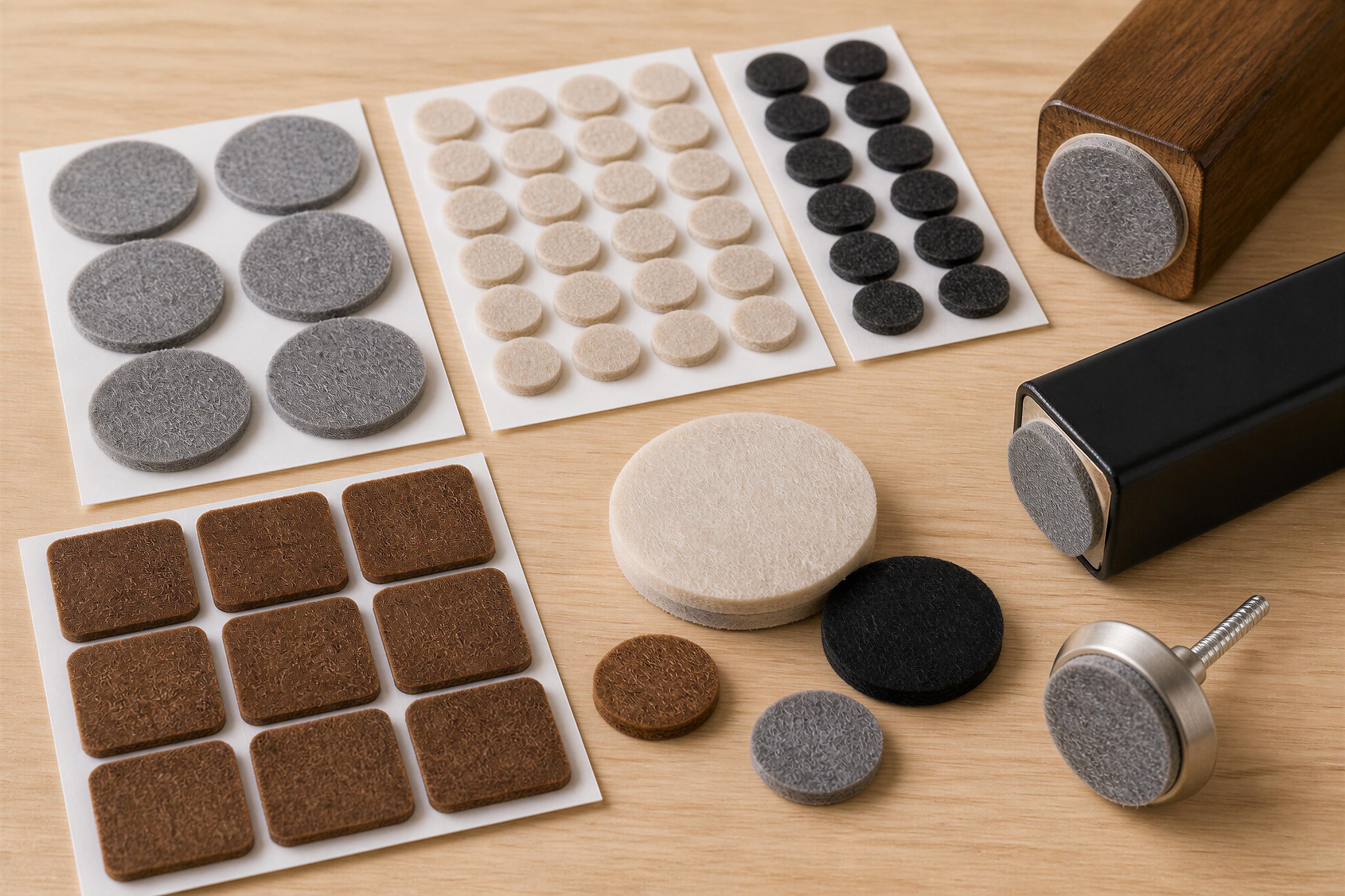
Laminate finishes are tough, but deeper scratches can show as a light line on a darker plank. Prevention is straightforward: keep grit off the floor, trim pet nails, replace broken furniture glides, use pads under chairs and tables, and use a chair mat under rolling office chairs. Put protection where the movement actually happens rather than assuming the AC rating covers every load.
Water and food bowls should sit on a mat that is safe that is safe for the floor and does not trap moisture. Lift it regularly and inspect the seams beneath it. A repeated splash zone can become a slow moisture problem even when each spill looks minor.

For deeper shopping, compare Mohawk RevWood Plus laminate, Shaw laminate, and MSI Everlife hybrid core laminate. Choose the stronger water protection when puppies, senior pets, playrooms, or frequent drink spills make delayed cleanup more likely.
Best Laminate Flooring for High-Traffic Areas
High traffic is not one condition. A hallway sees repeated footpaths, an entry sees grit, a kitchen adds chairs and moisture, and a rental or light commercial space may add rolling loads and less predictable care. AC4 is a strong residential target; AC5 can make sense for heavier use when the exact warranty permits it.
Lions Floor laminate is a good page to compare for AC4 durability and substantial visuals. Mohawk RevWood laminate gives shoppers a broad set of residential and light-commercial tiers. MSI Everlife hybrid core laminate can fit when a hybrid construction and water-focused positioning make more sense for the project.
- Good fit: hallways, entries, living rooms, kitchens, playrooms, home offices, bedrooms, rentals, and approved light-commercial spaces.
- Be careful: heavy rolling loads, food-service traffic, carts, constant chair movement, daily gravel, direct moisture at entries, or a use that the commercial warranty excludes.
- Visual strategy: medium natural tones, low gloss, light texture, and moderate variation usually hide dust, scuffs, and traffic better than very dark, very light, or flat visuals.
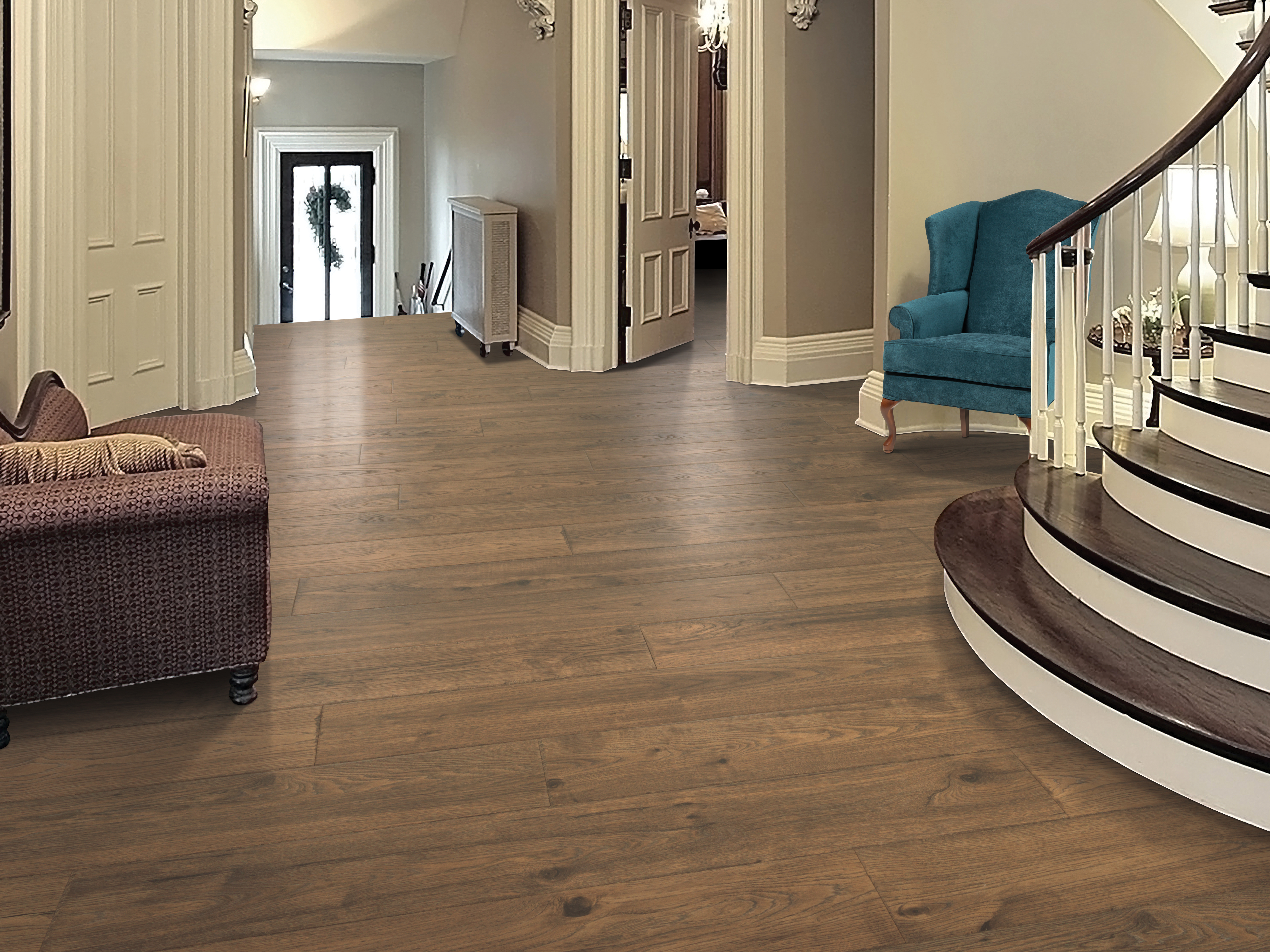
Entryways, Rolling Loads, and Rentals
Entry damage usually starts with grit rather than ordinary walking. Use clean walk-off mats inside and outside the door. Use felt pads or wider load-spreading protectors under movable furniture, and a chair mat under rolling office chairs. Avoid rubber-backed mats unless the flooring manufacturer approves them.
For rentals and approved light-commercial use, favor a current collection with a warranty that matches the traffic, a color that hides wear, clear installation records, and spare cartons for repairs. A busy home and a busy business are not the same use case, even when the room sizes look similar.
A residential hallway with children and dogs is still residential traffic. A checkout line, classroom, restaurant, office with rolling chairs all day, or space used by carts and wheelchairs can fall outside a light-commercial definition. Read the use restrictions rather than relying on the AC number alone, and store enough material to replace a damaged area if the collection later changes.
Useful starting pages are Lions Floor laminate, Mohawk RevWood Select laminate, and MSI Everlife hybrid core laminate.
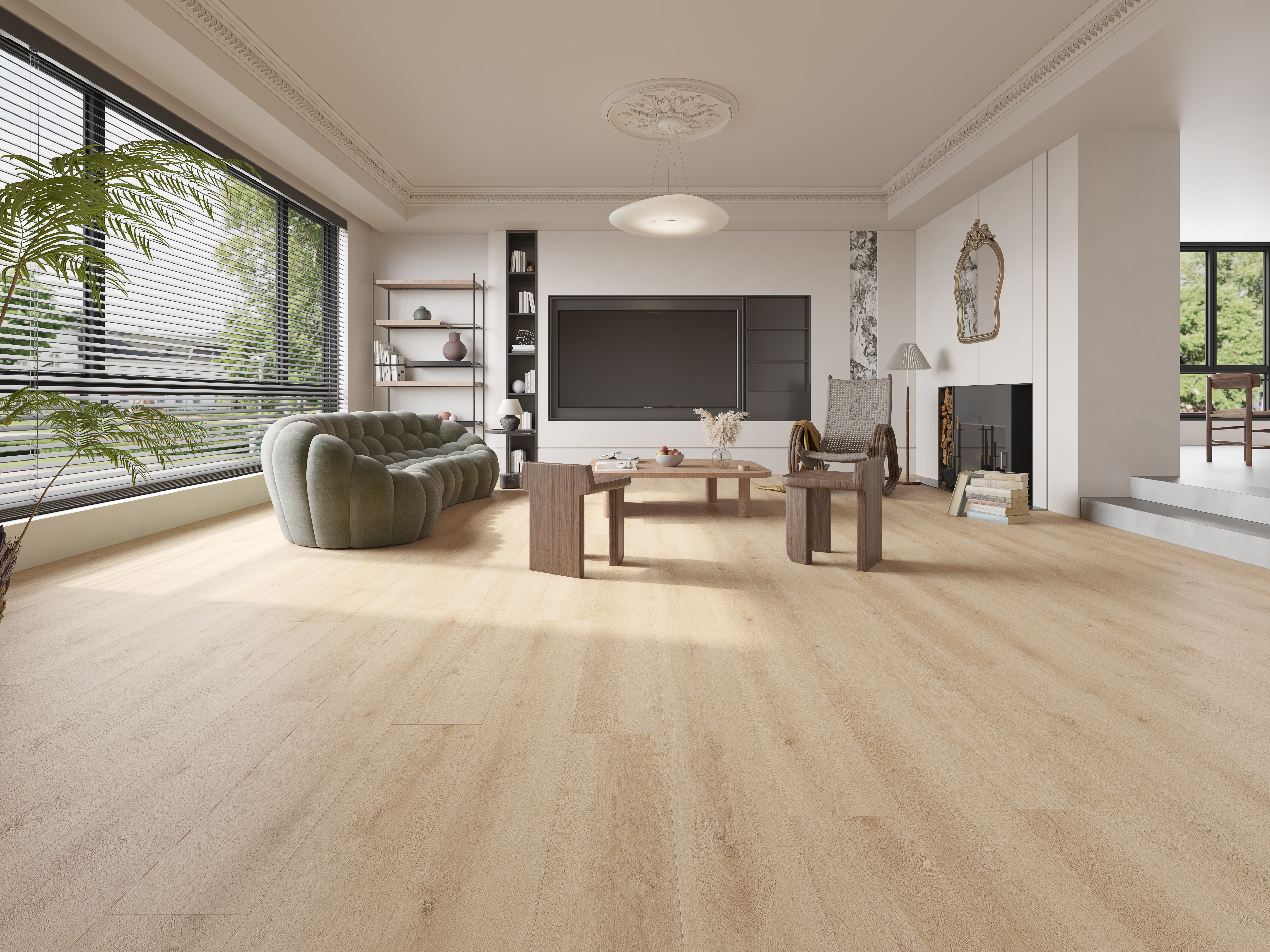
AC rating matters, but long-term results also depend on maintenance, clean mats, correct furniture protection, a flat subfloor, and the expansion plan.
Best Budget-Friendly Laminate Flooring
Budget laminate can be a smart purchase when it is a value floor from a known manufacturer rather than a cheap floor with weak milling, obvious repeats, or unclear support. A good value product should still have a usable visual, adequate surface durability, a stable locking system, and instructions and warranty terms that fit the room.
Bedrooms, guest rooms, offices, dry living rooms, bonus rooms, and lower-risk rentals are the easiest places to save. Kitchens, basements, frequent pet-accident zones, and bathrooms are where a stronger wet warranty and better edge system may justify the additional cost.
The cheapest carton price can become an expensive project when the floor chips during installation, needs extra waste, requires replacement before the trim and transitions have paid for themselves, or cannot be matched later. Budget decisions should include labor, underlayment, moldings, delivery, waste, and the value of having spare material. A quieter visual from an established brand is often safer than a dramatic bargain floor with only a few obvious printed boards.
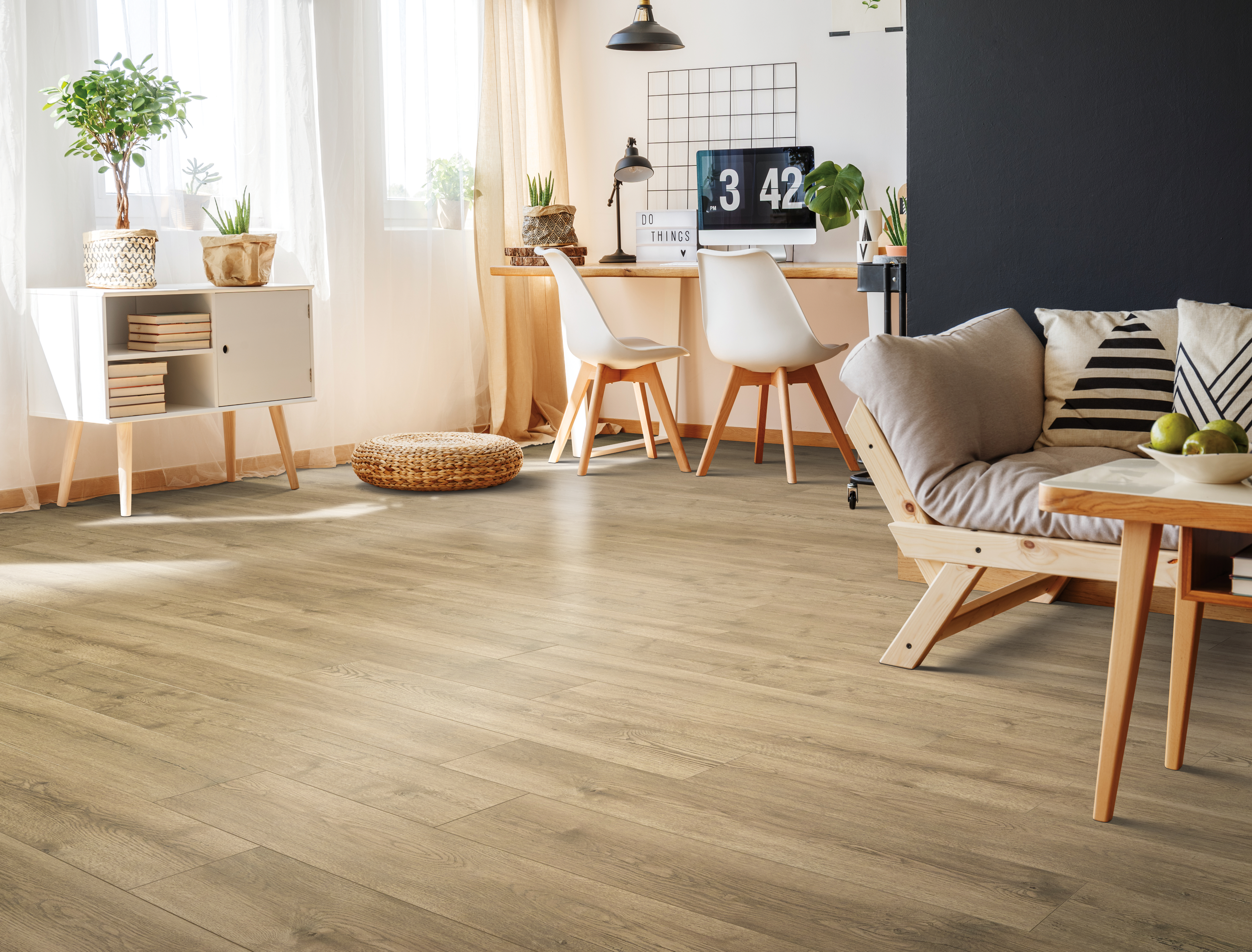
You do not always need the highest-end waterproof laminate for a dry room. Start with the broader Mohawk laminate page and compare value-focused RevWood options when the goal is a dependable floor without paying for the highest visual tier. MSI Everlife hybrid core laminate can offer practical hybrid value, while Dixie TRUCOR laminate is better treated as a project-specific option when its color, construction, price, and warranty line up.
How to Spot Real Value
- Choose an established manufacturer with a clear warranty process.
- Use AC3 for lighter rooms or AC4 for busier residential areas.
- Favor quieter medium-tone visuals when the collection has limited plank variation.
- Confirm that the locking system installs cleanly and replacement material can be stored.
- Count labor, pad, transitions, waste, and future repair risk—not just the carton price.
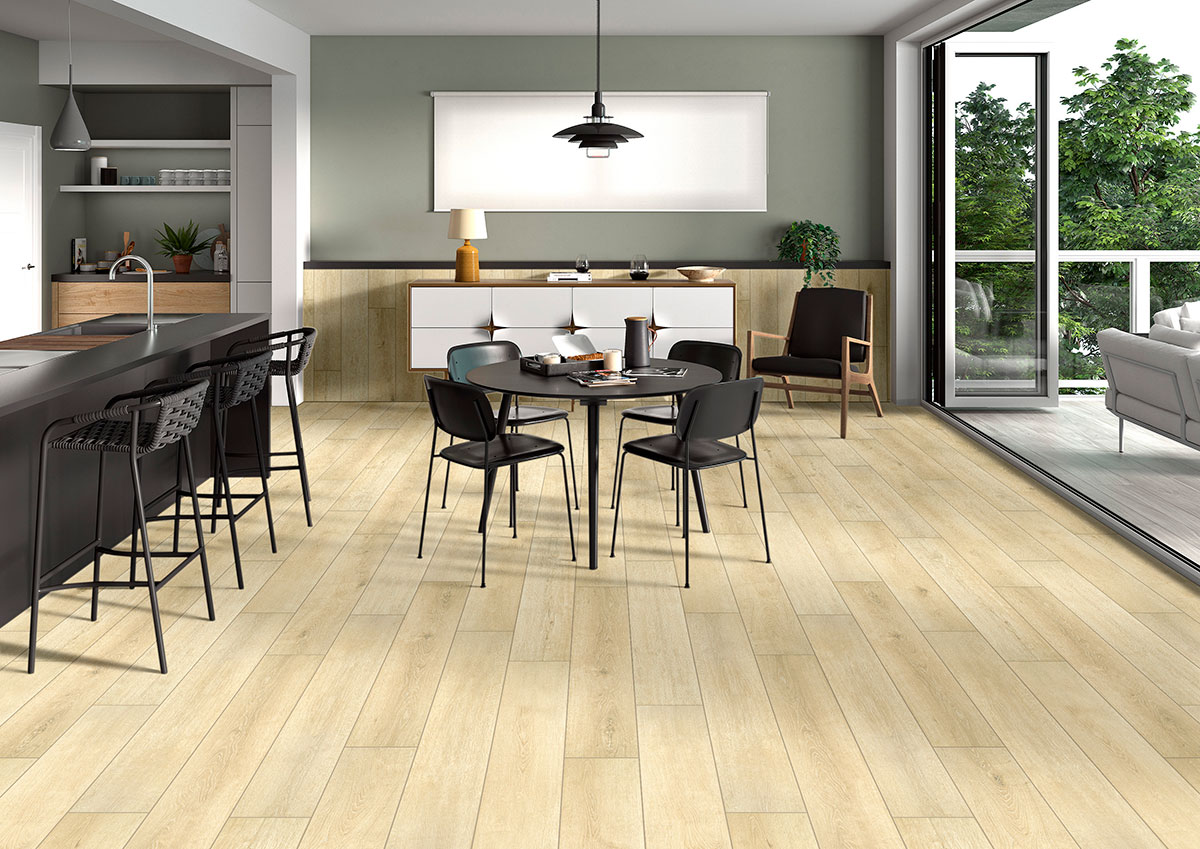
A well-made value laminate over a flat, dry subfloor can outperform a thicker bargain product with a weak core. Thickness is useful when it helps match door jambs and adjacent floors, but it should not be the reason a poor product wins the comparison.
Good starting points are Mohawk laminate, MSI Everlife hybrid core laminate, and Dixie TRUCOR laminate. Buy the least expensive floor that still has a clean visual, suitable construction, and a warranty that matches the room.
Best Premium-Look Laminate Flooring
Premium-looking laminate is about realism across a full room, not simply a higher price or thicker plank. The strongest visuals combine natural color movement, low gloss, texture that supports the printed grain, cleaner bevels, and enough plank variation to keep the installation from looking stamped.
RevWood Premier laminate is a logical starting point because Premier is the visual step-up in the RevWood family. The reason to choose it over Plus is primarily depth and realism rather than a dramatic jump in normal residential performance. The RevWood Premier sigNATURE technology guide explains the visual technology in more detail.
Mannington laminate is strong for classic and transitional wood looks. Lions Floor laminate can fit shoppers who want textured, substantial wide-plank styling. Engineered Floors PureGrain laminate is another newer wood-based, PVC-free option to compare.
Judge the Floor as a Room, Not a Sample
A small sample tells you color, texture, and gloss. It does not tell you whether a dramatic knot repeats every few rows or whether the surface looks flat from across the room. Review full-room images, compare several samples, and favor balanced visuals when the floor will run through a large open plan. A busy board is not automatically a premium board.
Premium visuals are most valuable where the floor becomes a major design surface: open living areas, kitchens connected to family rooms, large primary bedrooms, upper halls, and spaces where buyers are comparing laminate directly with engineered wood. In a small guest room, a clean value floor may be enough. In a large installation, weak bevels, flat texture, and repeat patterns become easier to notice, so the visual upgrade has a clearer purpose.
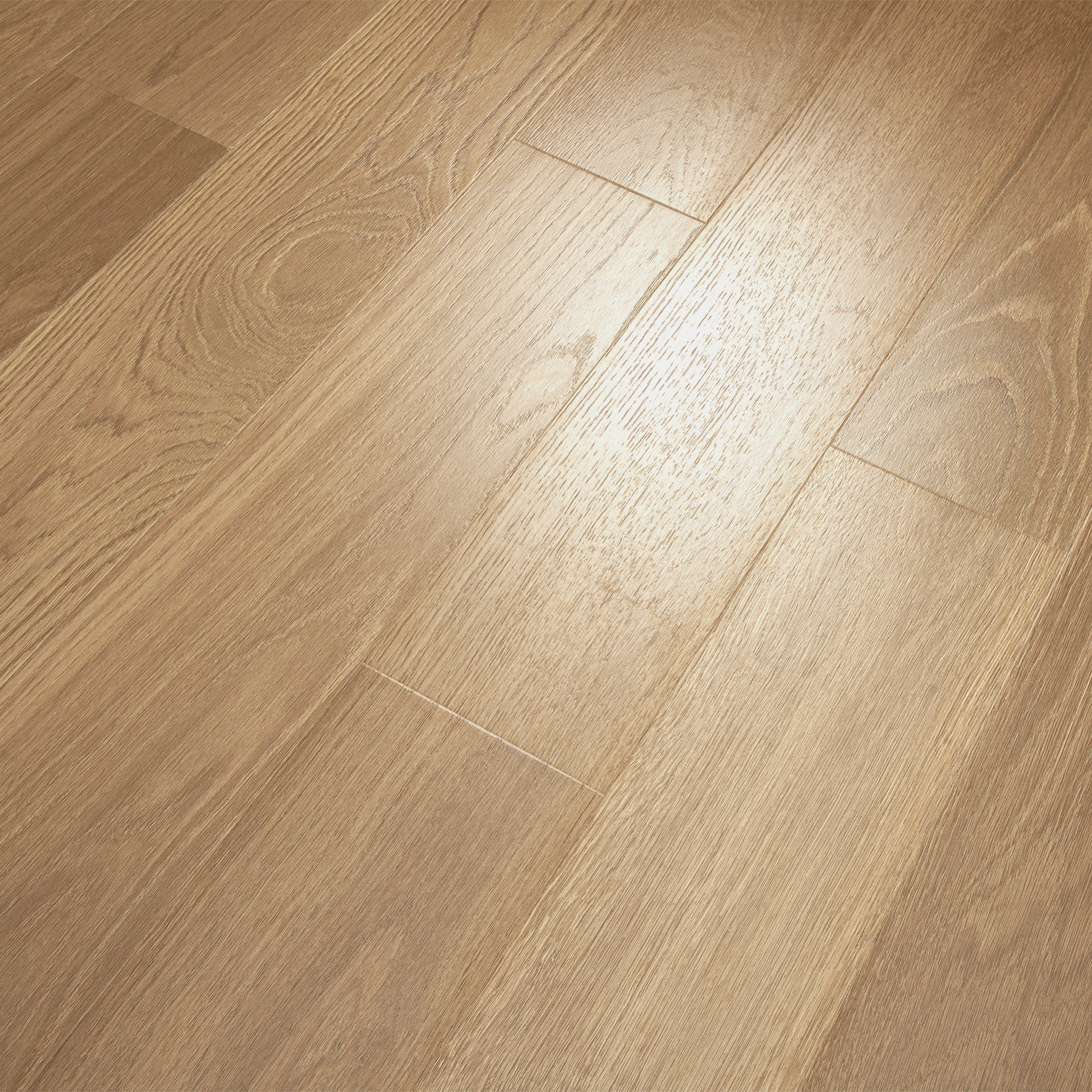
Texture should support the visual. Heavy oak grain should not feel flat, and saw marks or wire-brushing should have corresponding surface movement. A low-gloss finish usually looks more natural and hides smudges better. Integrated edge detail generally looks more convincing than a bevel that appears painted on.
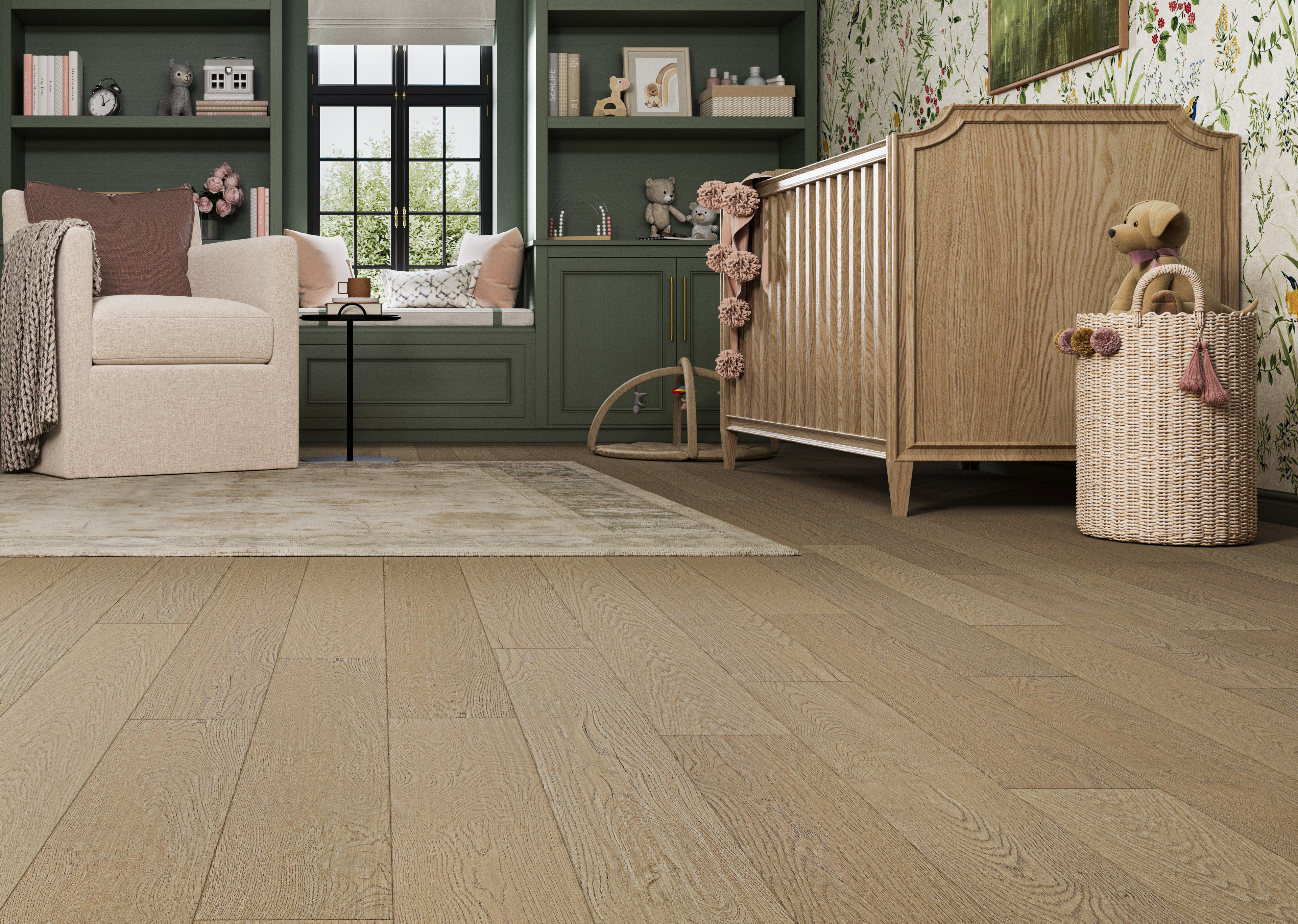
Engineered wood still has the advantage of a real wood veneer and no printed repeat. Premium laminate has the advantage when scratch resistance, easier daily care, and tolerance for pets and children matter more than owning a refinishable wood surface.
Compare RevWood Premier laminate, Mannington laminate, Lions Floor laminate, and Engineered Floors PureGrain laminate. The best premium choice is the floor that still looks natural across the entire installation, not the one with the most dramatic single plank.
Best Laminate Flooring for Bathrooms and Wet Areas
Bathrooms are where laminate recommendations should become more cautious. A half bath or carefully used wet area can be reasonable when the product is approved and installed exactly as required. A full bathroom with daily shower or tub water is a higher-risk application, and tile or waterproof vinyl is often the safer fit.
The problem is not an ordinary splash. It is water that pools near a shower door, reaches an unsealed cut edge, stays beneath a bath mat, or works under a floating floor without being noticed. Once water is below the floor, the issue is no longer limited to the surface warranty.
Half baths are usually the easiest wet-area use because there is no tub or shower creating daily water at the perimeter. Laundry rooms are more conditional: an approved laminate can handle ordinary use, but a failed hose or leaking appliance is normally a different event from a surface spill. A washer pan, sound hoses, accessible shutoffs, and periodic checks behind appliances reduce risk, but they do not expand the written warranty.
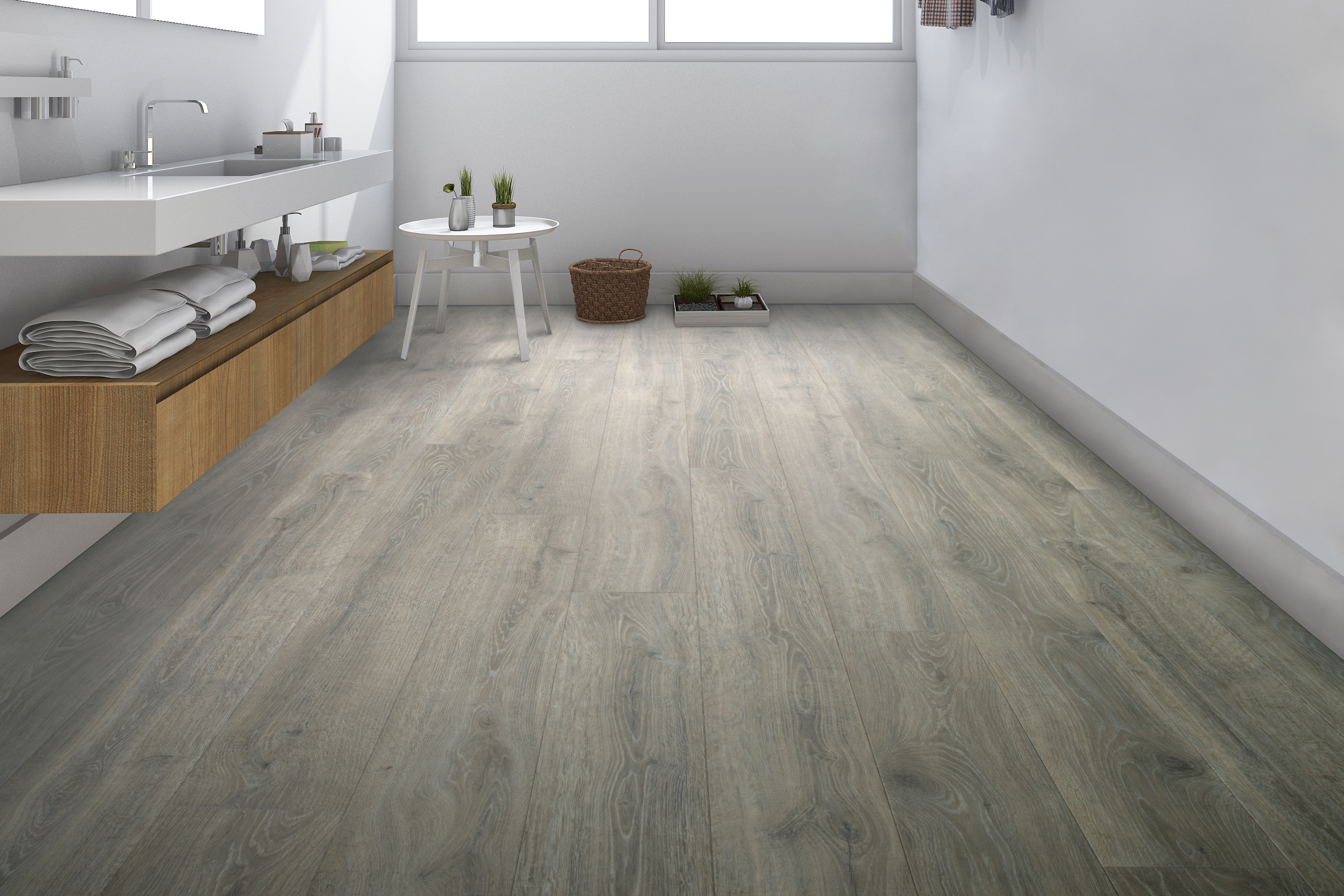
Shoppers committed to laminate should compare the strongest wet-protection options first. Mohawk RevWood laminate, especially Plus and Premier, is a broad place to start; the Mohawk RevWood guide explains the tier differences. Mannington Restoration laminate and MSI Everlife hybrid core laminate are legitimate alternatives when their exact bathroom approval, sealing instructions, and visuals fit better.
- Good fit: powder rooms, half baths, and carefully managed wet areas where the exact product is approved, spills are cleaned quickly, and mats are lifted to dry.
- Be careful or avoid: full baths with frequent tub splashing, water pooling at shower corners, wet mats left in place, floor drains, saunas, steam showers, recurring toilet leaks, or an unwillingness to seal required edges.
- Laundry rooms: may work with an approved product, correct sealing, and a sound installation, but a washer leak is not the same as a topical spill.
Perimeter Sealing and Fixed Objects
When the instructions require perimeter protection, use the specified system. Depending on the product, that may include 100% silicone, an edge-sealing kit, or another approved method with backer rod or another approved component. Leave the required expansion space and seal it as directed; do not pack the planks tightly against walls, tubs, toilets, or trim.
Floating laminate also needs room to move around toilets, vanities, tubs, cabinets, and door jambs. Fixed cabinets and vanities usually should not pin the floor unless the product instructions specifically allow the method. Bathroom performance depends as much on these installation details as on the surface claim.
Useful starting points are Mohawk RevWood Plus laminate, Mannington Restoration laminate, and MSI Everlife hybrid core laminate. When the room gets wet every day or water may sit unnoticed, tile or waterproof vinyl is usually the safer recommendation.
Best Laminate Flooring Brands to Shortlist at Znet
No brand wins every room, budget, and visual preference. The individual collection matters more than the logo. For many shoppers, Mohawk RevWood laminate is the broadest place to begin because the lineup creates a clear step-up path, but Mannington, Shaw, Lions Floor, MSI, Dixie/TRUCOR, and Engineered Floors remain legitimate alternatives based on project fit.
| Brand or line | Best starting fit | Main decision |
|---|---|---|
| Mohawk RevWood | Broadest shortlist | Choose the tier |
| Mannington Restoration | Classic visuals | Angle-tap installation |
| Shaw laminate | Pets and scratches | Exact collection |
| Lions Floor | AC4, wide-plank looks | Water limits |
| MSI Everlife | Hybrid waterproof value | Series specs |
| TRUCOR TYMBR | Wood-fiber-core option | Price and warranty |
| PureGrain Renew | New Znet option | Compare exact product |
Mohawk RevWood: The Broad Starting Point
RevWood Essentials is the traditional entry point. Select adds stronger water and pet positioning. Plus steps up the wet warranty and commonly uses a more integrated pressed bevel. Premier is the visual tier, with greater surface depth and realism. That structure makes RevWood easy to compare without assuming the most expensive option is necessary for every room.
RevWood Select is a strong middle-ground choice for buyers who want water and pet protection without paying primarily for Premier visuals. RevWood Plus is the all-around step-up when edge detail and wet protection matter. Premier makes the most sense when the installed look is the deciding factor.
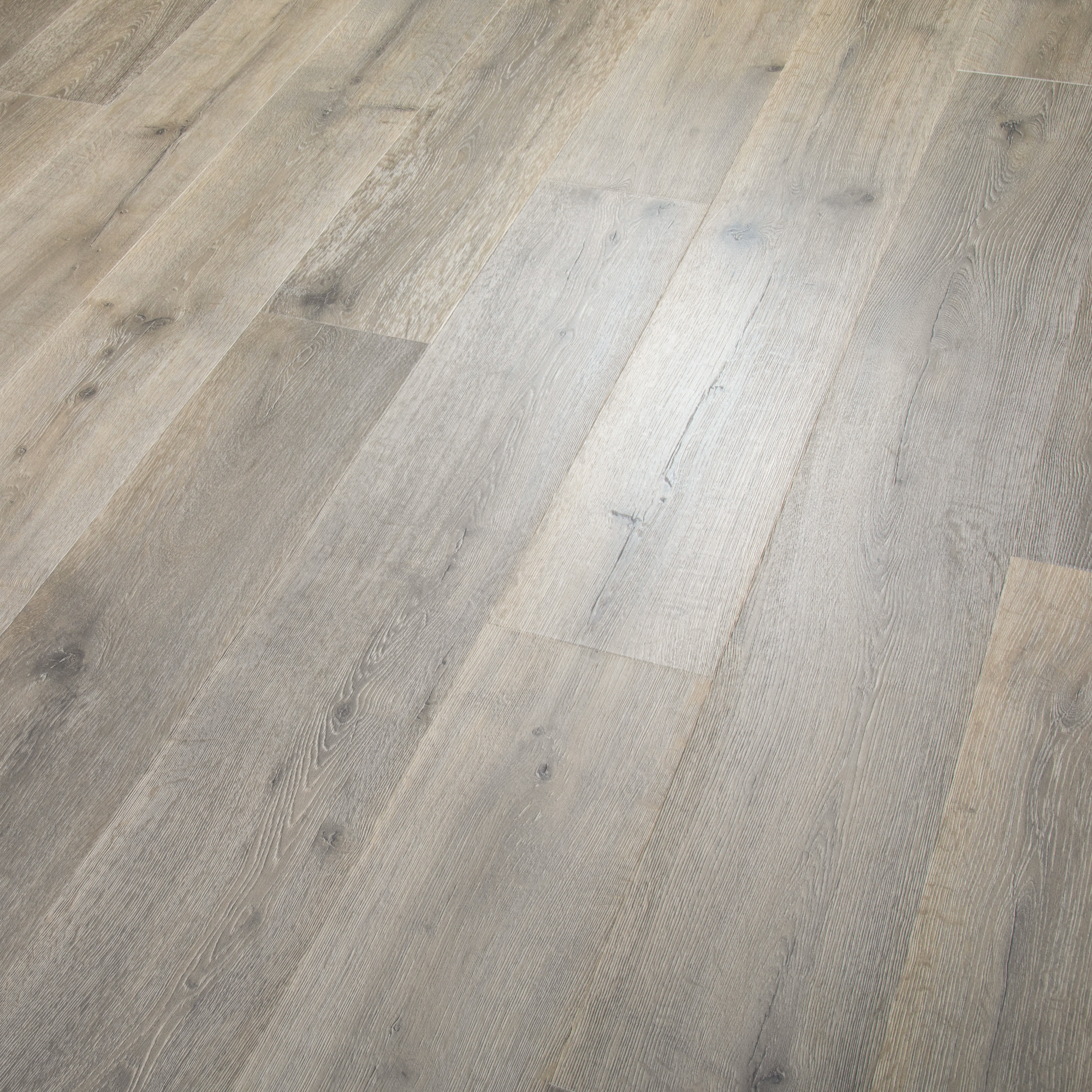
Start with RevWood when you want a broad color range, clear tiers, established support, and a practical mix of scratch, pet, and water protection. Compare another brand when its color is better, attached pad is essential, a hybrid construction is preferred, or the total project price works out better.
For line-by-line context, read RevWood Select, Plus, and Premier and the RevWood Premier flooring guide.
Mannington Restoration
Mannington laminate is one of the first alternatives to compare with RevWood. Restoration works well for shoppers who prefer traditional oak, hickory, maple, or mixed-species visuals that coordinate easily with existing cabinets, furniture, and trim. Its water-focused positioning makes it relevant for kitchens, mudrooms, laundry areas, and carefully managed bathrooms when the exact product is approved.
The installation method is an important collection-specific detail. Current Mannington laminate may use an angle-tap method while older material and older videos can show a different joint. Use the instructions packaged with the current flooring. Mannington is not a fallback choice; it is a valid pick when its visual and construction fit the room better.
Shaw Laminate
Shaw laminate flooring deserves a place on the shortlist for pet-focused homes. Pet Perfect products address the concerns buyers commonly have—stains, scratches, topical moisture, and daily traffic—but the exact Shaw collection still controls the AC rating, attached pad, water terms, and pet coverage.
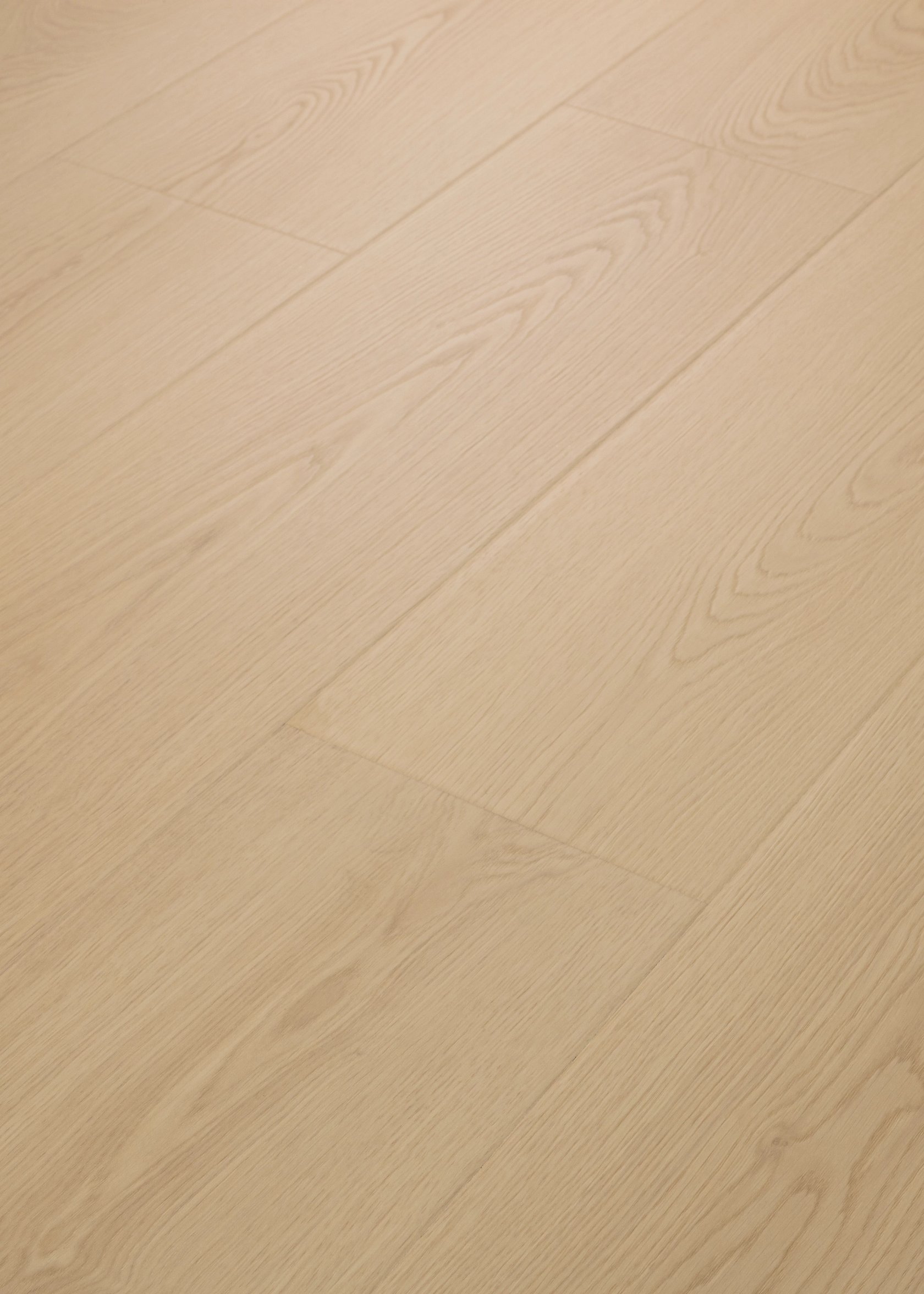
Start with Shaw when pets, attached pad, or PVC-free laminate positioning are important. Compare another brand when you want the broadest assortment, prefer the RevWood tier structure, want a Mannington visual, or do not need to pay for pet-focused coverage.
Lions Floor
Lions Floor laminate fits shoppers who want AC4 surface durability, textured wood visuals, and substantial wide-plank styling for busy residential spaces. It is a legitimate premium-looking alternative rather than a generic substitute for a larger brand.
Treat the exact collection as water-resistant or waterproof only according to its current documents. Lions is not intended to solve flooding, slab moisture, hydrostatic pressure, or a use beyond its warranty. It is strongest when the visual and traffic rating fit the project and the buyer does not need the largest possible color assortment.
MSI Everlife Hybrid Rigid Core
MSI Everlife flooring illustrates how modern product names overlap. MSI calls the products Hybrid Rigid Core rather than traditional laminate, but they compete for the same buyer seeking a rigid floating wood-look floor with scratch resistance and stronger household-moisture performance.
MSI is especially relevant when waterproof positioning and practical value both matter. Smithcliffs is the value-oriented comparison and Shorecliffs is a step-up within the family. Shop the exact series because AC rating, thickness, pad, commercial use, and wet-area approval can vary.
Dixie TRUCOR TYMBR
Dixie TRUCOR laminate is a more specialized choice built around a wood-fiber core, scratch resistance, pet-friendly use, and water resistance. It makes sense when a specific TYMBR color or construction fits the project, not because it is automatically the lowest-priced laminate.
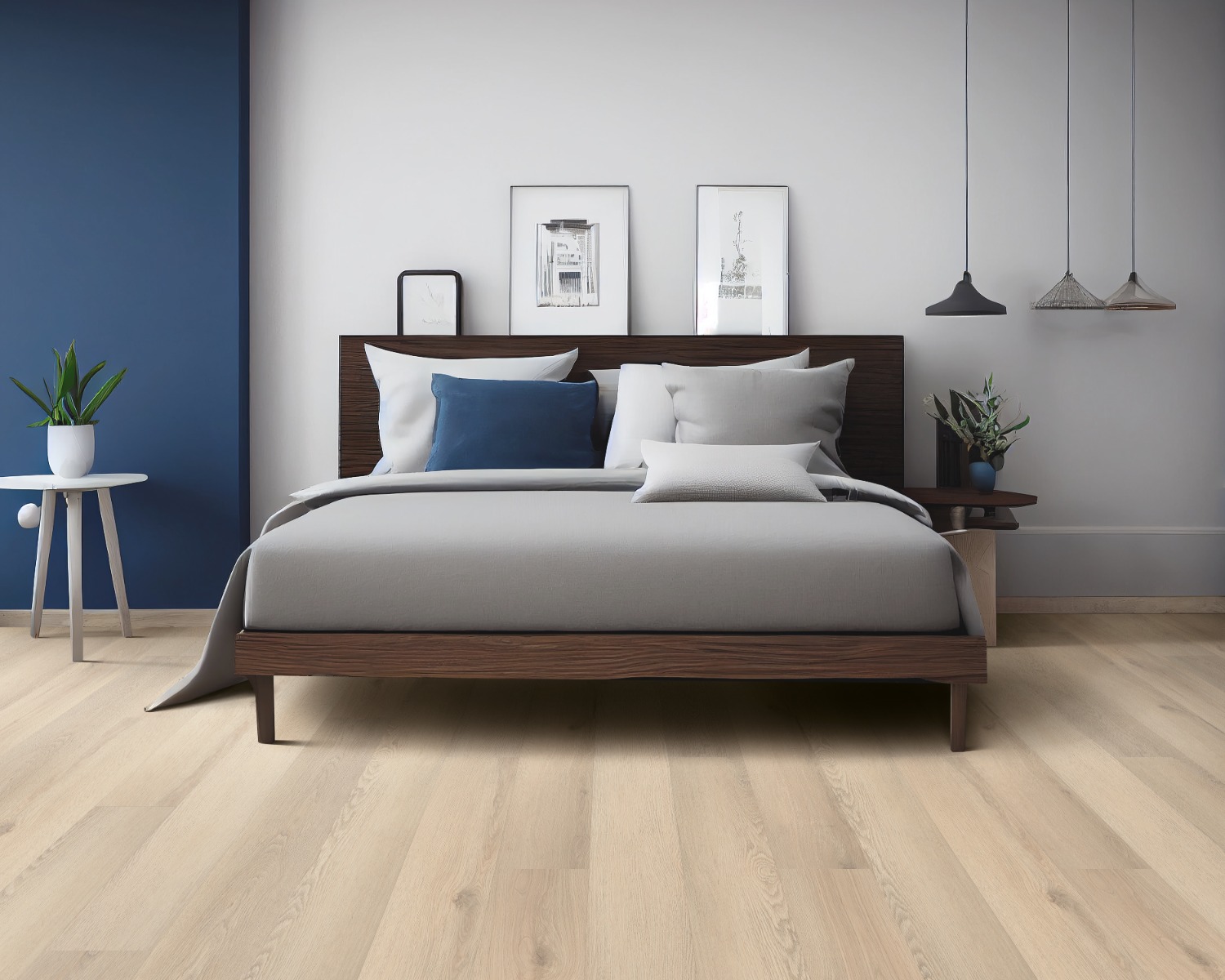
Compare the exact product price and warranty. TRUCOR sells more than one flooring construction, so broad brand language should not be applied to every TYMBR item. It is a valid project-specific option when the value, visual, and expected replacement needs make sense.
Engineered Floors PureGrain Renew
Engineered Floors PureGrain laminate is the newest Znet brand in this guide.PureGrain Renew is a newer wood-based, PVC-free laminate option worth comparing by its exact visual, construction, warranty, and project fit.
Shoppers interested in PVC-free flooring may also want to compare Mohawk PureTech. It overlaps with laminate in appearance and buying intent, but Mohawk sells it as resilient PVC-free flooring, so it deserves a separate comparison.
Installation, Underlayment, and Subfloor Basics
Installation quality can erase the advantage of a premium product. A wet, dirty, or uneven base, the wrong pad, missing expansion space, or fixed cabinets pinning the floor can lead to gaps, joint damage, noise, movement, or lifted edges. Use the current instructions for the exact product; Znet’s DIY laminate flooring installation guide covers the general process.
Use Product-Specific Instructions and Acclimation Rules
Products from the same manufacturer may differ in locking method, acclimation, expansion gap, underlayment, concrete barrier, doorway transitions, large-room limits, wet-area sealing, radiant-heat approval, and permitted subfloors. Current Mannington Restoration laminate is a good example because newer material may use a different installation method than older videos show.
There is no universal three-day acclimation rule. Some products require a stated period; others allow installation when the flooring and room are already within the required conditions. When acclimation is required, store cartons flat in the climate-controlled installation area, away from exterior walls, vents, and direct concrete, and maintain the specified temperature and humidity before, during, and after the work.
The package or current product guide should also be used to confirm approved subfloors, maximum continuous room size, doorway breaks, and radiant-heat rules. These details can change when a manufacturer updates the locking profile or construction, even when the brand and collection name remain familiar. A scan code or current online guide may be useful, but the installer should keep a copy of the instructions actually used.
Subfloor Flatness and Concrete Moisture
A floating floor needs a flat base, which is not the same as perfectly level. A room may slope slightly and still be flat; the real problems are localized humps, dips, ridges, damaged plywood, uneven tile, and poor patches. Manufacturer limits vary, so use the exact tolerance in the product instructions rather than treating a common example as a universal rule.
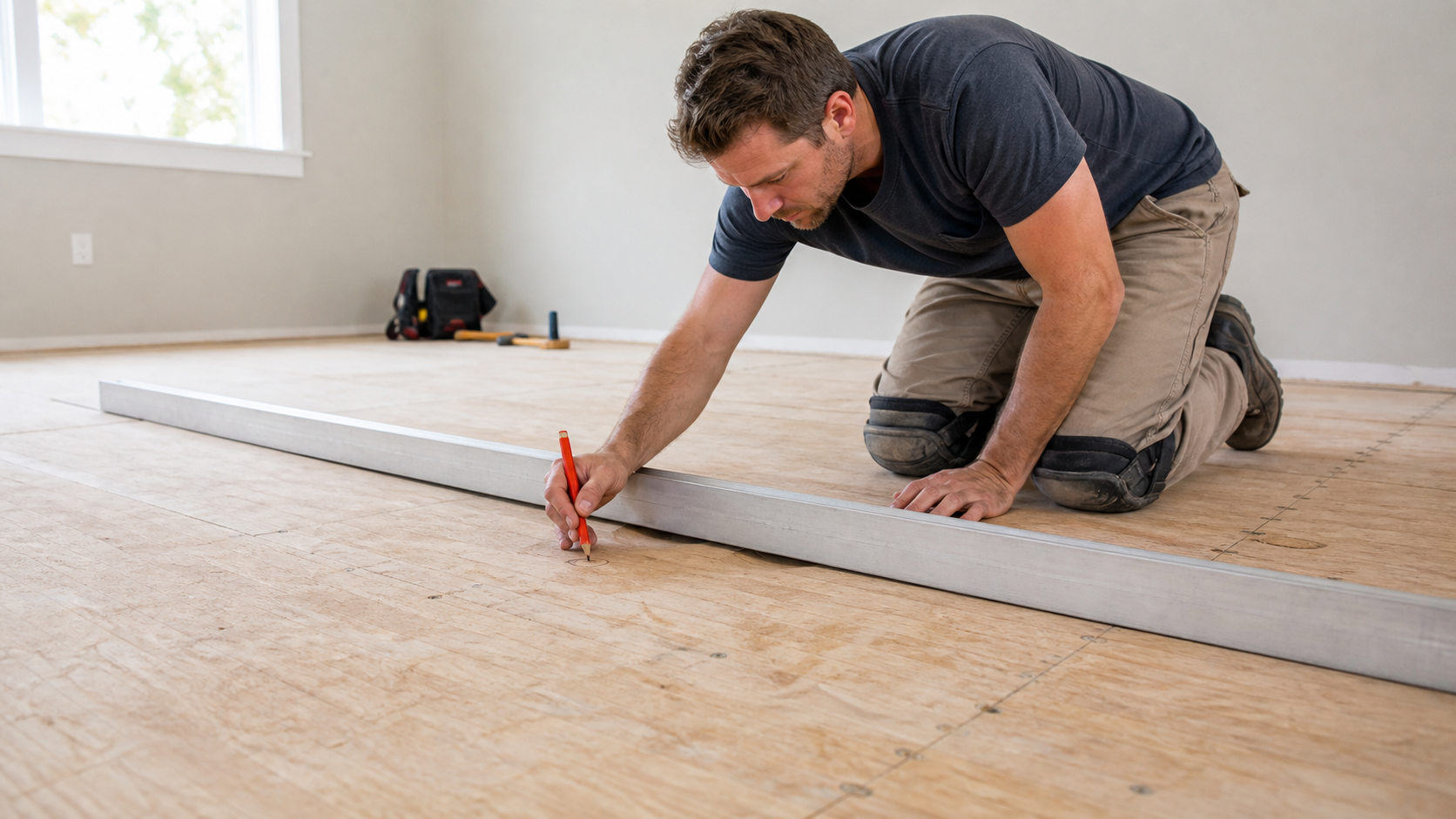
Check the base with a long straightedge. Mark high and low areas, then grind, sand, patch, or level with compatible materials as appropriate. Underlayment does not flatten a dip, and adding more cushion can increase vertical movement at the locking joints.
Concrete can look dry while releasing moisture vapor. Complete the required testing and keep the results. On-grade and below-grade concrete commonly require a 6-mil polyethylene layer or approved underlayment with an integrated barrier, but the exact product instructions control. A vapor barrier is not a repair for active seepage, hydrostatic pressure, or a plumbing leak.
Depending on the product, the required documentation may include in-situ relative-humidity testing, calcium-chloride testing, a calibrated concrete moisture meter, or pH and alkalinity results. Record the location, date, and outcome. If swelling, movement, mold, or joint failure is reported later, the manufacturer may ask for proof that the slab met its limits before installation.
Attached Pad, Expansion Gaps, and Transitions
Attached pad improves sound, comfort, and convenience, but it does not automatically satisfy the moisture requirement over concrete. A product with attached pad may still need polyethylene. A product without pad may require a separate approved underlayment. Stacking pads can create excessive movement, damage the locking profile, or void coverage.
Before ordering underlayment, confirm the subfloor type, whether the plank already has pad, and whether the approved system includes the required vapor protection. Extra cushion can stress the joints when it lets the joints flex more than intended.
Leave the required expansion space around walls, jambs, pipes, columns, cabinets, islands, vanities, fireplaces, and other fixed objects. Trim should cover the gap without fastening through or clamping the floating floor. Permanent cabinets and fixed islands normally go in before the laminate unless the instructions allow another method.
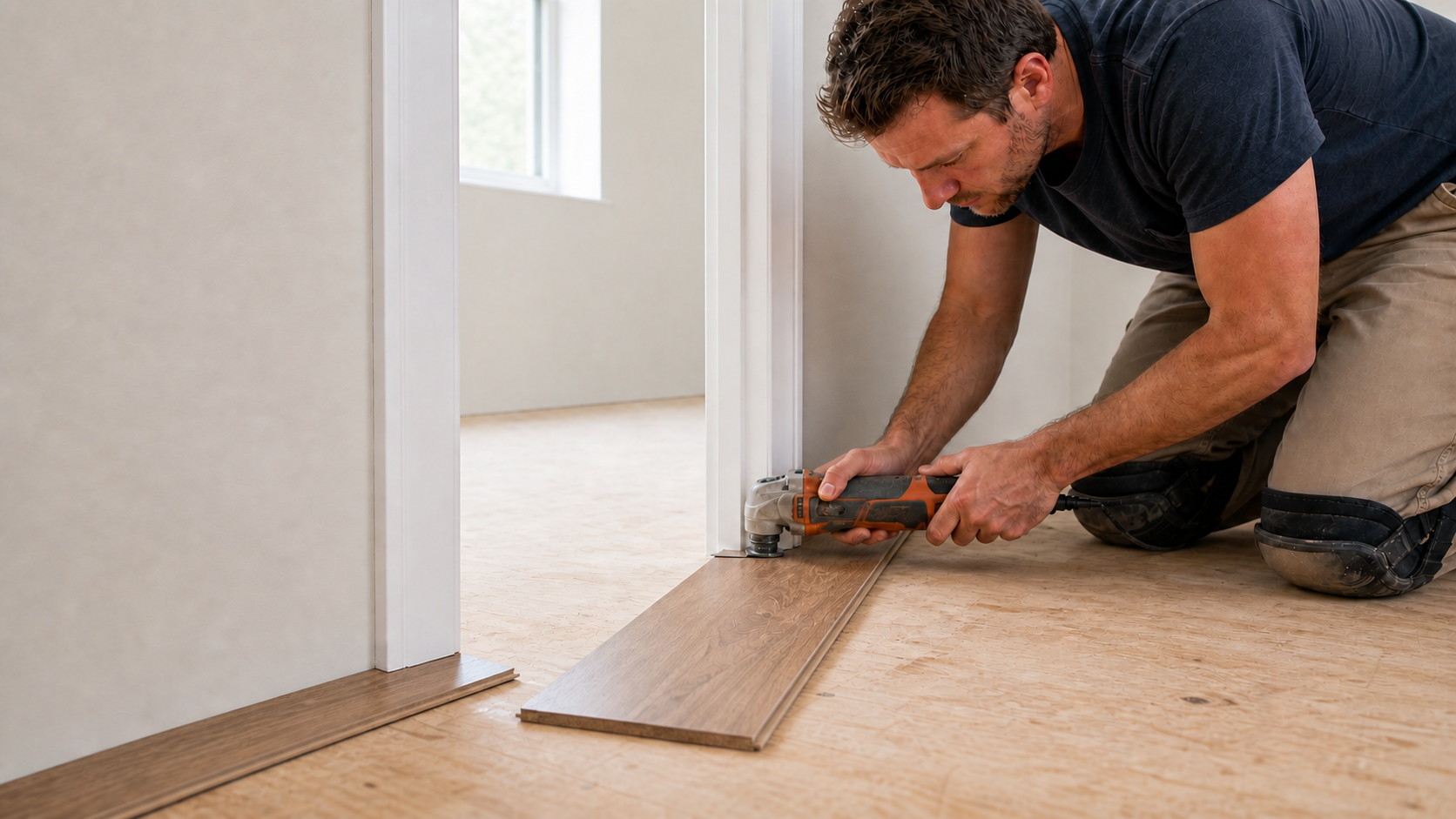
Plan T-moldings and expansion breaks before the floor goes down. They may be required in narrow doorways, between rooms, where plank direction or subfloor changes, or across large continuous areas. The limits vary by product; do not assume one brand’s doorway or room-size rule applies to another.
The required gap is often in the range of 5/16 or 3/8 inch, but that is not a universal specification. Some products require doorway transitions below a stated opening width or a break after a stated continuous distance. Use spacers rather than judging by eye, undercut casings where appropriate, and fasten baseboard or quarter round to the wall—not through the floating floor.
Locking Method and Pre-Installation Check
Use the locking method designed for the floor—angle-angle, angle-tap, drop-lock, or another manufacturer-specific profile. Do not hammer directly against an exposed plank edge. Use the recommended tapping block, pull bar, spacers, and soft-faced hammer, and inspect each board before installation. Blend cartons, distribute repeated prints, and avoid obvious H-joints or stair-step patterns.
- Current instructions are on site for the exact product.
- The room, subfloor, climate, and radiant-heat conditions are approved.
- Required acclimation and moisture testing are complete.
- The base is flat, clean, dry, and structurally sound.
- Correct underlayment, vapor protection, transitions, and wet-area materials are available.
- Expansion gaps, fixed objects, and doorway breaks are planned.
- The needed tools are available, including an approved tapping system or Laminate installation kit.
Laminate Flooring Maintenance, Durability, and Warranties
Most laminate care is simple: remove grit, use limited moisture, and avoid tools or cleaners the manufacturer does not approve. Maintenance is also part of warranty compliance, so the care guide for the exact product matters more than a generic cleaning routine.
Cleaning and Everyday Protection
Sweep or vacuum before mopping so sand and debris are not dragged across the finish. Use a hard-surface vacuum setting without an aggressive rotating brush when the manufacturer calls for it.
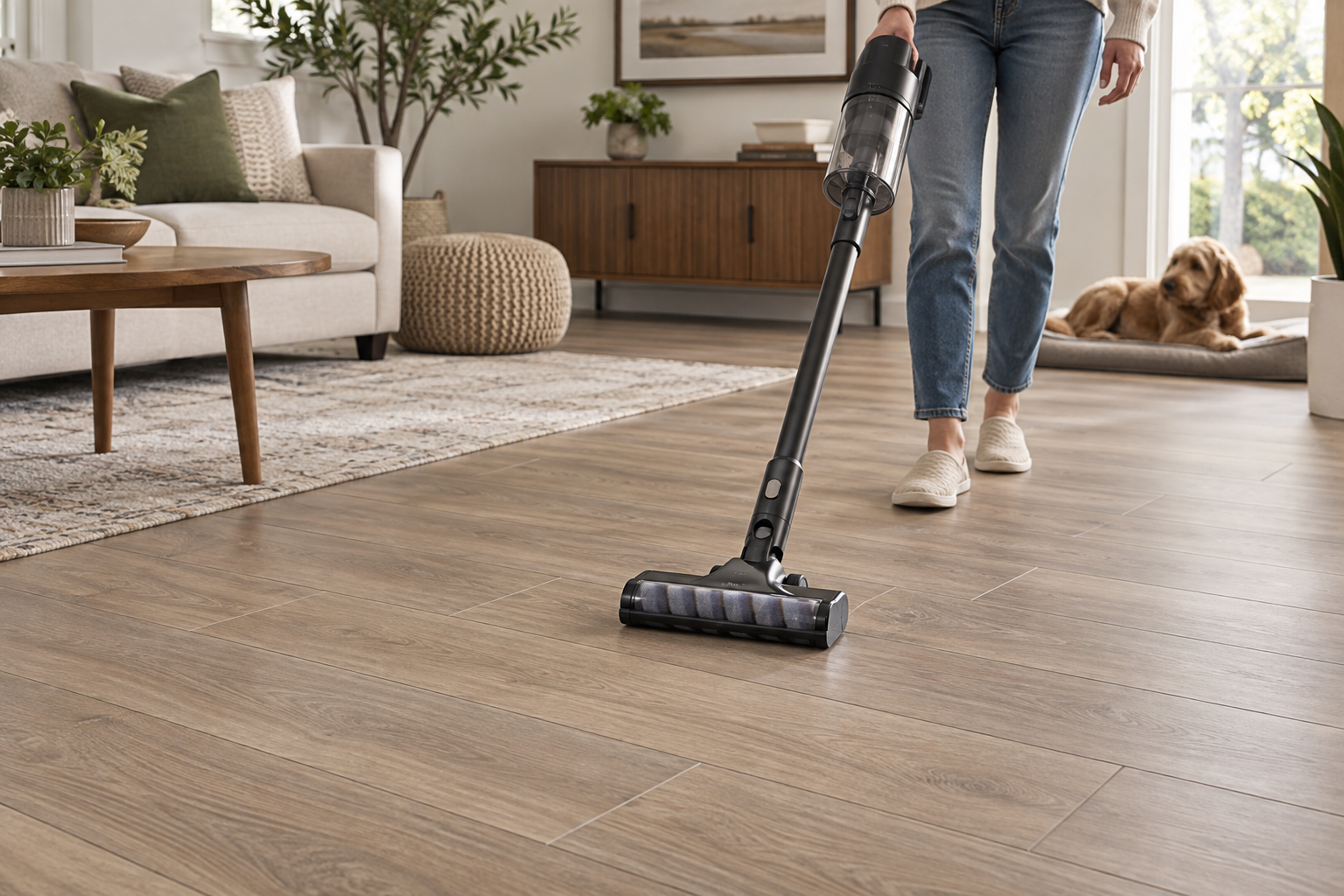
A microfiber Dust mop is useful for routine grit and pet hair. When damp cleaning is permitted, use a well-wrung mop rather than flooding the surface. Dry puddles and heavy moisture promptly, especially at edges, seams, and beneath mats.
Use the cleaner listed or permitted by the flooring manufacturer. Avoid assuming that vinegar, oil soap, wax, polish, or a general-purpose product is safe simply because it is labeled for hard floors. Residue can change gloss, attract soil, or create a condition the warranty excludes.
Do not use a steam mop unless the exact care guide permits it. Steam combines heat and moisture at the joints, and broad internet advice is not a substitute for product-specific approval.
Furniture protection should match the load. Use clean felt or approved glides under chairs and tables, wider protectors under heavy pieces, and a chair mat under rolling chairs. Lift furniture rather than dragging it. Keep entry mats clean so they do not become reservoirs of sand and pebbles.
Scratch Resistance, Service Life, and Warranty Reality
Laminate is scratch-resistant, not scratch-proof. Damage can come from grit, a damaged glide, heavy rolling traffic, an appliance dragged across the floor, or repeated pressure in one path. AC ratings help describe abrasion resistance, but they do not cover every scratch or impact.
How long a floor lasts depends on product quality, traffic, moisture, installation, climate control, cleaning, furniture protection, and whether the room fits the warranty. A good floor in a well-prepared residential space can remain useful far longer than the same product in a wet basement or rough rental.
| Warranty area | Usually addresses | Check closely |
|---|---|---|
| Manufacturing | Product defects | Visible-defect rules |
| Wear | Wear through décor | Surface scratches |
| Water | Topical moisture | Edges, leaks, flooding |
| Pet or stain | Defined incidents | Cleanup conditions |
| Joint integrity | Locking failure | Installation conditions |
| Commercial | Approved light use | Traffic restrictions |
| Labor | Limited installation cost | Time and proration |
A “lifetime” warranty does not necessarily mean full replacement value forever. Coverage may be prorated, limited to the original purchaser and residence, or reduced to material only after a stated period. Read the exclusions for flooding, plumbing or appliance leaks, slab moisture, poor flatness, missing expansion space, wrong underlayment, unapproved cleaners, steam, rolling loads, pets, sunlight, and commercial use.
Choose the warranty for the risks you actually have. A pet household should review the pet definitions and cleanup window. A kitchen or bath installation should focus on wet-area approval and sealing. A rental or home business should confirm the permitted traffic and rolling-load language. A long warranty term is less useful when the room, installation method, or maintenance routine falls outside the conditions from the start.
Keep the Records Before You Need Them
- Sales invoice, product name, color, SKU, and carton labels.
- Lot or production numbers and the warranty and care documents.
- Installer invoice and the exact installation instructions used.
- Moisture-test results, underlayment details, and installation photographs.
- Photographs of the subfloor, barrier, expansion gaps, and transitions before trim covers them.
- Several spare planks or cartons for future repairs.
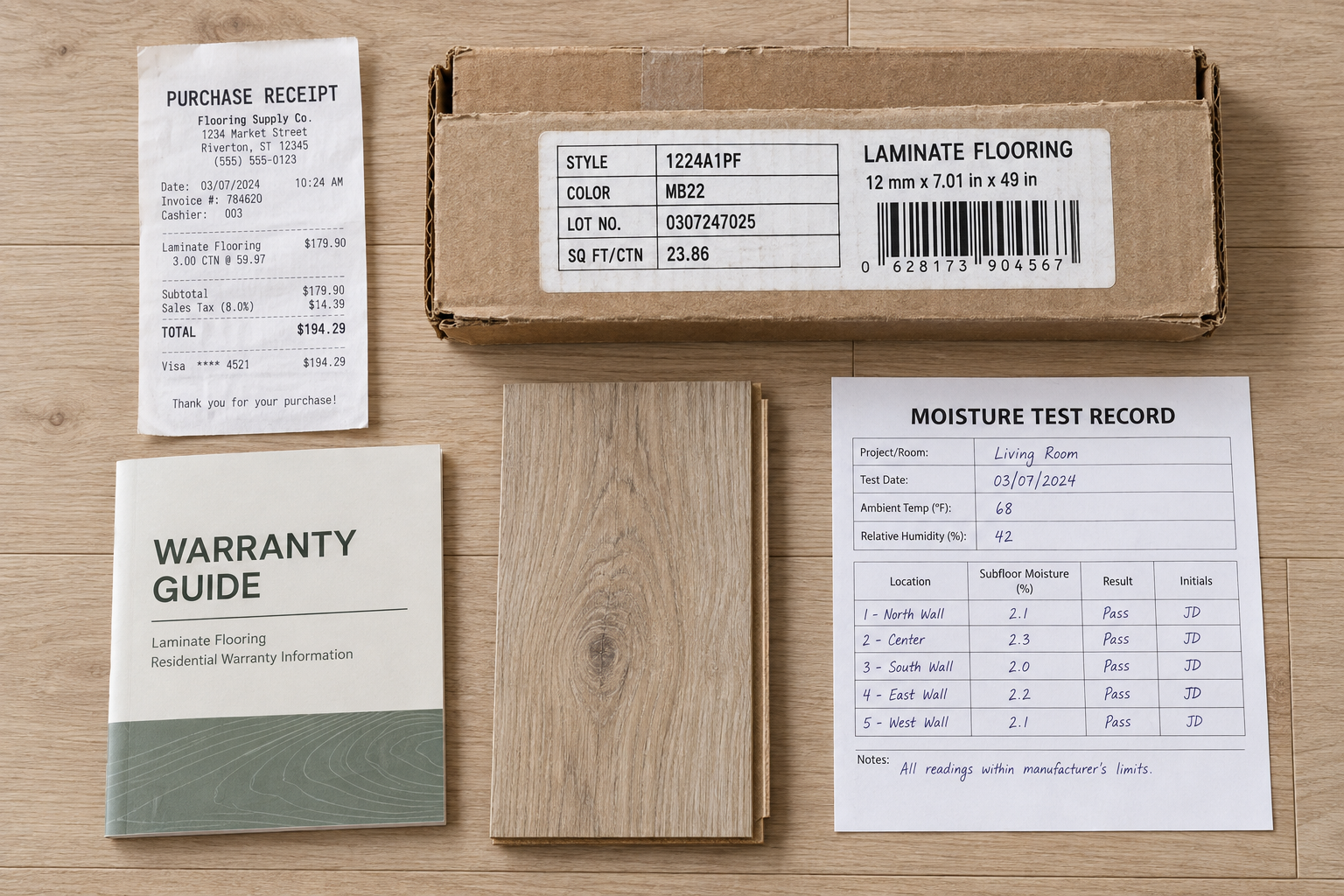
Inspect boards before they are installed; a visible defect is usually considered accepted after installation. Spare material is often more useful than waiting years later for a matching production run.
Frequently Asked Questions About the Best Laminate Flooring
What is the best laminate flooring overall?
There is no universal winner. For many busy homes, start with an AC4 surface, dense core, reliable locking system, realistic plank variation, and a water warranty suited to the room. Mohawk RevWood laminate is the broadest comparison point, then another brand may win on color, construction, pad, or price.
Is waterproof laminate really waterproof?
It is generally designed for topical household moisture under stated conditions, not flooding, plumbing failures, hydrostatic pressure, or water trapped below the floor. Perimeters and cut edges may require sealing. The Mohawk RevWood guide explains the RevWood tiers.
What AC rating do I need?
AC3 can suit bedrooms and lighter spaces. AC4 is the practical target for most active homes. AC5 may be appropriate for heavier traffic or approved commercial use. The rating measures abrasion resistance, not moisture, impact, joint quality, or installation.
Is 12mm laminate better than 8mm or 10mm?
Not automatically. Thickness can help with feel and matching nearby floor heights, but core density, milling, surface quality, subfloor flatness, and installation are usually more important performance factors.
Is laminate better than luxury vinyl plank?
Laminate often provides stronger scratch resistance and convincing wood visuals. LVP generally offers more flexibility where moisture may sit unnoticed. Choose based on the room risk and the exact products rather than treating either category as universally better.
5-Minute Laminate Flooring Buying Checklist
- The exact product is approved for the room and subfloor.
- The water warranty matches the actual moisture risk; waterproof does not mean floodproof or automatically cover appliance leaks.
- The AC rating fits the traffic without replacing other quality checks.
- The visual has enough plank variation for the room size.
- Thickness works with doors, trim, adjacent floors, and transitions; it is not the sole quality measure.
- Pad, vapor barrier, flatness, and concrete moisture-testing requirements are understood; attached pad does not automatically replace a vapor barrier.
- Expansion gaps and required doorway transitions are planned, and fixed cabinets will not pin the floating floor.
- Wet-area sealing and cleaning rules are acceptable, including restrictions on steam and unapproved cleaners.
- The warranty permits the intended residential or commercial use.
- Waste and extra cartons are included for installation and future repairs.
- Receipts, carton labels, and moisture-test records will be retained.
Final Recommendation
For most shoppers, begin with Mohawk RevWood laminate because it offers the clearest progression from value-oriented laminate to stronger wet protection and premium visuals. Do not stop there when another collection is a better fit.
- Compare Mannington laminate for traditional visuals and Restoration water protection.
- Compare Shaw laminate when pets, scratches, attached pad, or PVC-free laminate positioning matter.
- Compare Lions Floor laminate for AC4 durability, texture, and wide-plank styling.
- Compare MSI Everlife hybrid core laminate when hybrid waterproof performance and value are priorities.
- Compare Dixie TRUCOR laminate when a TYMBR color and wood-fiber-core construction fit the project.
- Review Engineered Floors PureGrain laminate as another newer option to compare.
- Consider Mohawk PureTech separately when the goal is PVC-free resilient flooring rather than conventional laminate.
After narrowing the list, order samples, view them in the room by day and night, compare them with cabinets and adjacent finishes, and study room scenes for repeat. Then confirm the current installation guide and product-specific warranty. The best laminate is the floor that fits the room, the risk, and the installation—not the floor with the biggest number on the sample...


