Start typing to search posts!
Results for:
Categories
Recent Posts
TRUCOR Introduces New Collection Names
July 31, 2026
Comfort Heights Vs. Haven Heights: A Comparison
July 1, 2026
Why Felt Pads Matter for Hardwood, LVP, and Laminate Floors
By Ehva Glines
June 1, 2026
Most homeowners focus on cleaners, mops, and routine maintenance to keep their floors looking good. Those things help, but one easy detail often gets missed: felt pads. Properly sized felt pads under chair legs, tables, stools, sofas, and other furniture can help reduce everyday scratches, scuffs, and noise on hardwood, laminate, and luxury vinyl floors.
Felt pads might seem unassuming at first, as they don't seem like they’d have much effect on the health of your floor. After all, they’re so small! Despite their unassuming nature, they’re incredibly important to the overall lifespan of your floors due to how they do an incredible job at protecting them. Here at Znet Flooring, we are eager to teach you how to care for your floors to the best of your ability, to truly make the most out of your investment!
What Are Felt Pads?
Felt pads are soft furniture glides or protectors placed under furniture legs, bases, or contact points. Felt pads can help reduce scratches, scuffs, noise, and some furniture-leg pressure on most hard-surface floors, including hardwood, luxury vinyl, and laminate. They are not a guarantee against dents from very heavy furniture, damaged furniture legs, grit trapped under the pad, or rolling chair wheels.
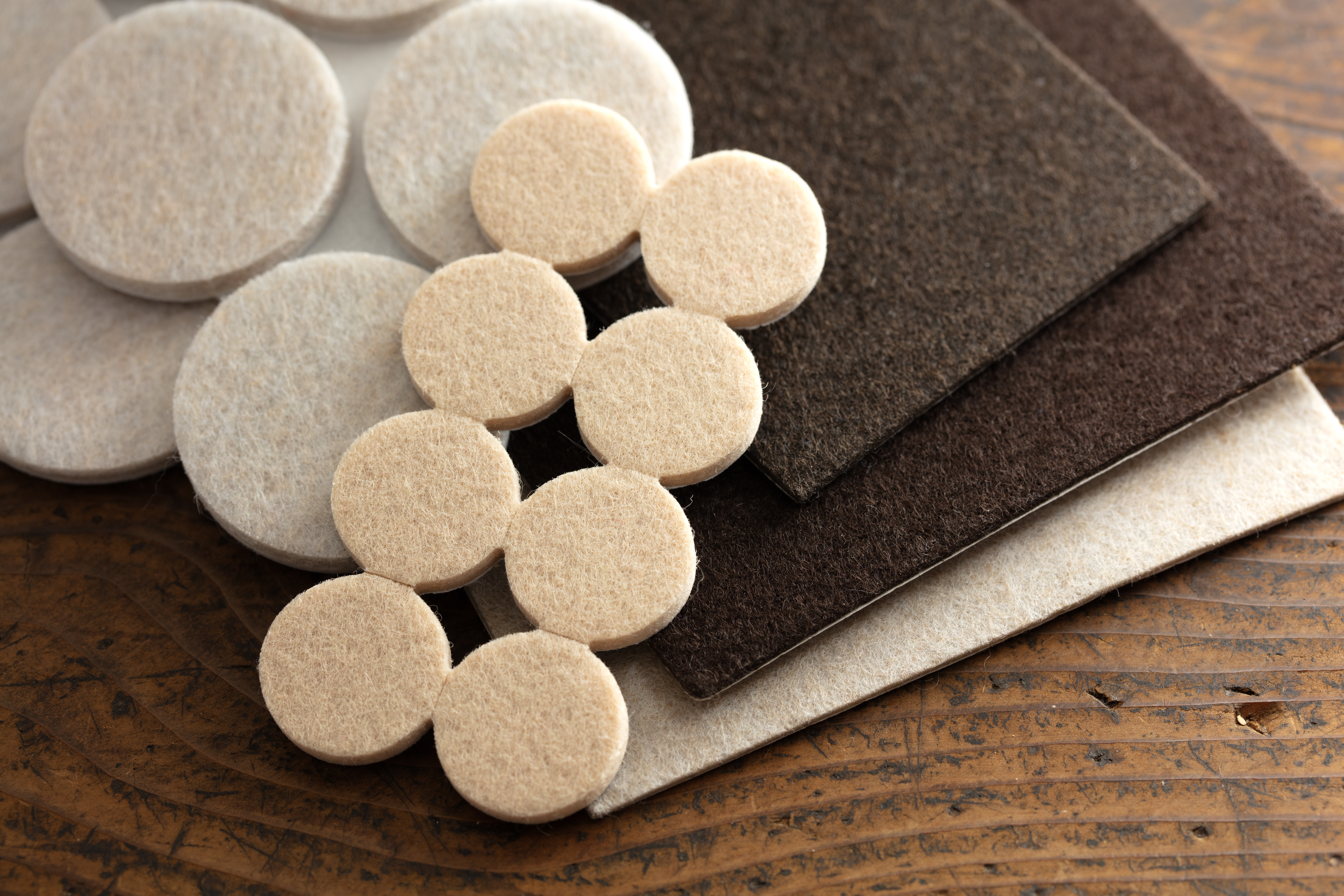
Felt as a material itself, is incredibly resilient. Felt is able to withstand and absorb an impressive amount of shock, allowing it to absorb the damage of your furniture instead of damaging the floor. Along with that, they also help distribute weight evenly!
Felt pads are best used on furniture like bar stools, chairs, tables, and couches, though for the best performance it is recommended that they are put on all movable pieces of furniture. If it can move, it can scratch your floor!
Why Use Felt Pads on Furniture?
- Reduce scratches and scuffs from chairs, stools, tables, sofas, and other furniture
- Make furniture easier to slide without scraping the floor
- Lower noise when chairs or stools are moved
- Add a soft barrier between furniture legs and hard-surface flooring
- Help protect high-use areas like dining rooms, kitchens, breakfast nooks, and bar spaces
- Reduce minor pressure marks from some furniture legs
Protect Your Floor From Furniture Damage
A new floor is a major purchase, and small scratches can become frustrating fast. Cleaning products help with surface maintenance, but they do not protect the floor from chair legs, stools, tables, sofas, and other furniture being dragged or shifted across the room.
Felt pads add a soft barrier between the furniture and the floor. They can help reduce scratches, scuffs, and noise on hardwood, laminate, and luxury vinyl floors. They are especially useful under pieces that move often, such as dining chairs, bar stools, end tables, kitchen tables, and bar tables.
Flooring collections from major brands like Mohawk flooring and Shaw flooring can change or be discontinued over time. If a damaged area needs to be repaired years later, finding the exact same color, plank size, texture, or construction may be difficult. Felt pads are a simple way to reduce the chance of furniture damage becoming a larger repair problem later.
Best Places to Use Felt Pads
Felt pads are most useful under furniture that moves or shifts during normal use. Common places to use them include:
• Dining chairs
• Kitchen chairs
• Bar stools
• Kitchen tables
• Bar tables
• Coffee tables
• End tables
• Sofas
• Recliners
• Desks
• Bed frames
• Entryway benches
For chairs and stools, check the pads more often because they wear down faster than pads under furniture that rarely moves.
Felt Pads vs. Gripper Pads
Felt pads and gripper pads are used for different reasons. Felt pads are best for furniture that moves often, such as dining chairs, bar stools, kitchen chairs, and small tables. They help furniture slide more smoothly while reducing scratches, scuffs, and noise.
Gripper pads are better for furniture you do not want to move, such as sofas, sectionals, recliners, beds, and some larger tables. Instead of helping furniture slide, they add traction to help keep the piece in place.
For hard-surface floors, make sure any gripper pad is safe for your specific flooring type. Some rubber or latex-backed products may discolor certain vinyl or resilient floors, so check the floor manufacturer’s care instructions before using them. When in doubt, choose non-staining floor protectors designed for hardwood, laminate, or luxury vinyl.
Affiliate disclosure: This post contains Amazon affiliate links. As an Amazon Associate Znet Flooring earns from qualifying purchases at no additional cost to the buyer.
How to Install Felt Pads on Furniture Legs
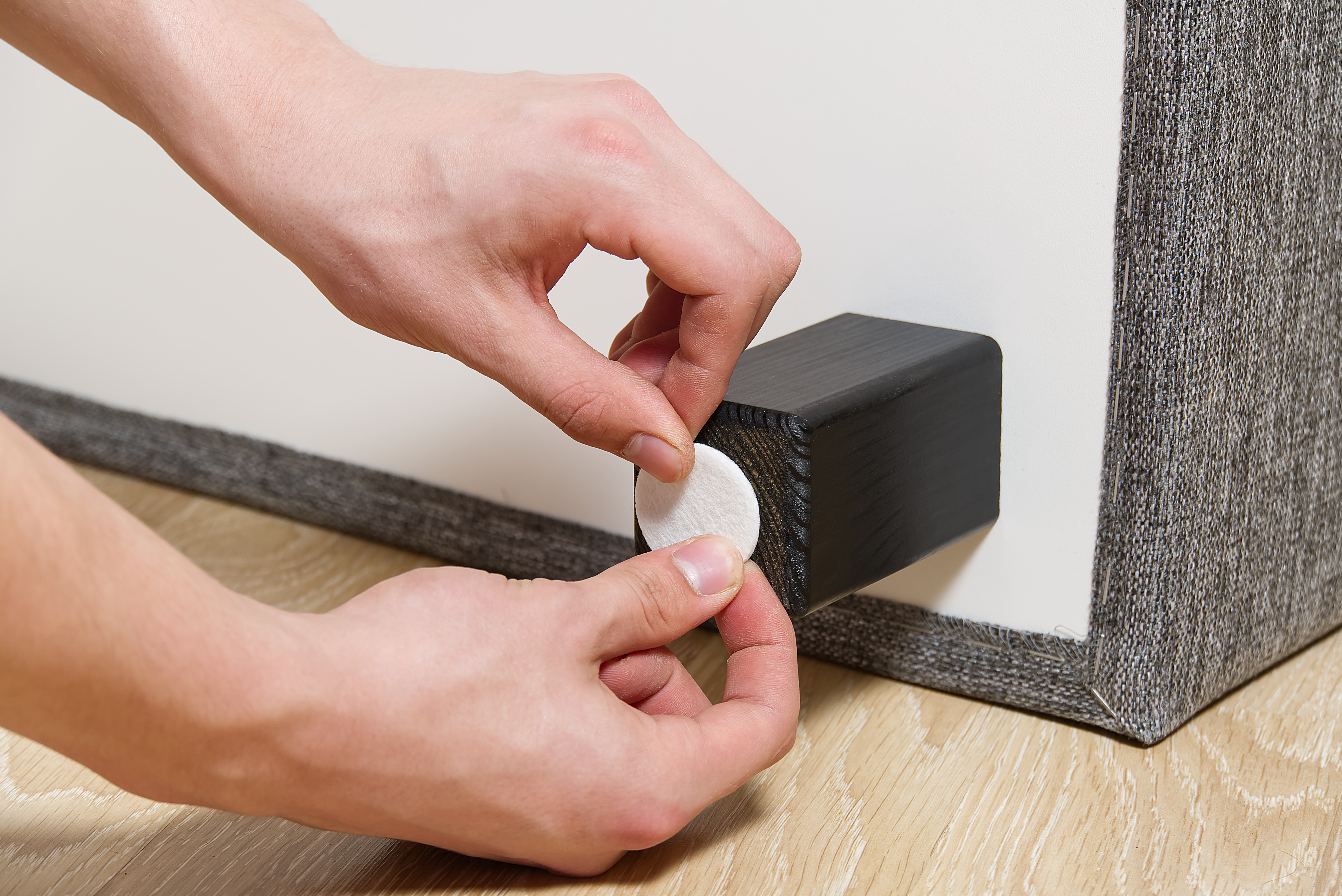
Felt pads are easy to install, but they work best when the furniture leg is clean, dry, and flat. Before applying the pad, wipe the bottom of the furniture leg to remove dust, dirt, grit, old adhesive, or debris. If the surface is dirty, the pad may not stick well and trapped grit can still scratch the floor.
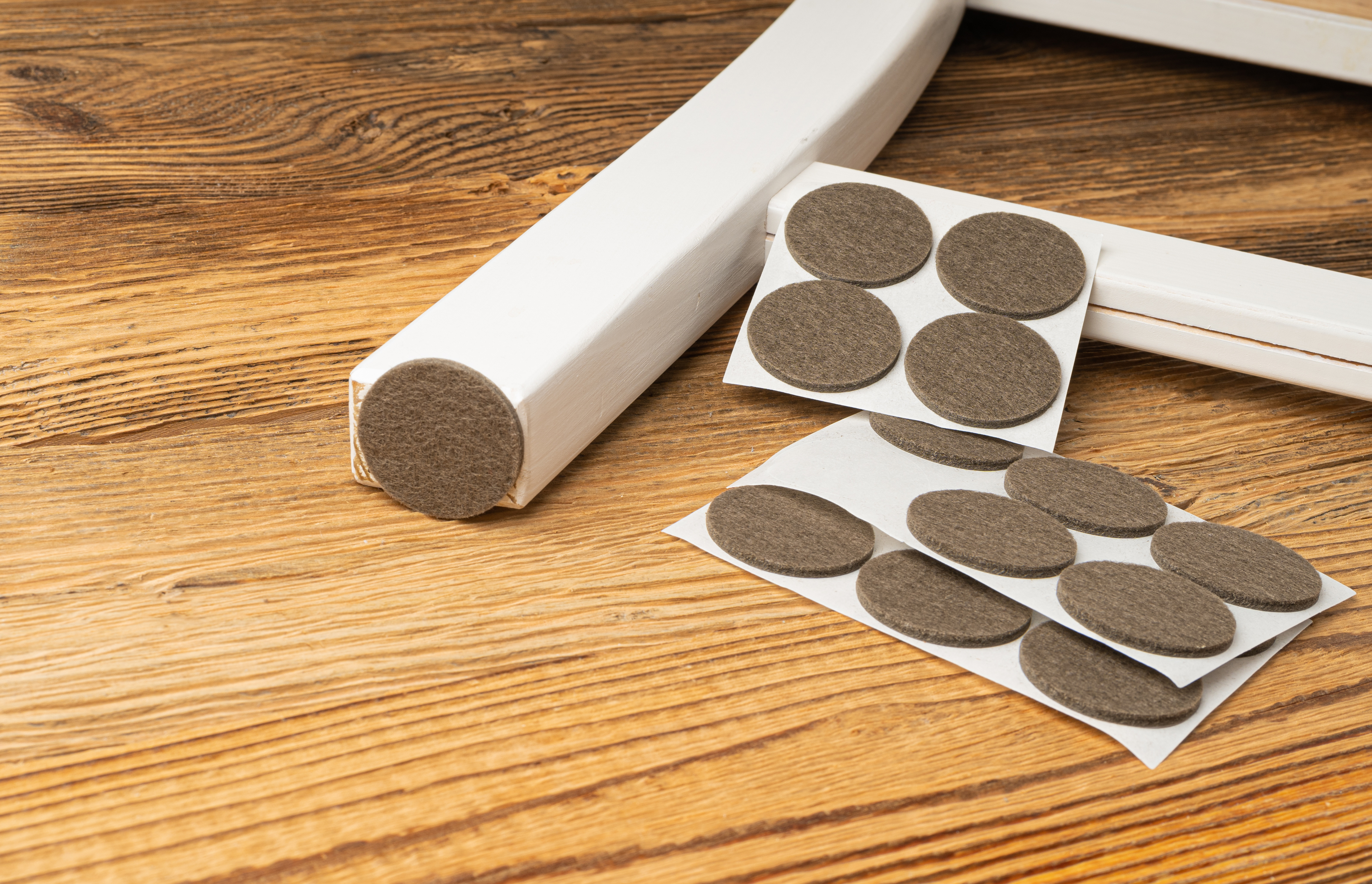
Choose a pad that covers the part of the furniture that touches the floor. If you are using cut-to-fit felt, trim it so it fits the bottom of the leg without hanging over the edges. Peel off the backing, press the pad firmly into place, and hold it for a few seconds so the adhesive bonds to the surface.
After installation, check the pads occasionally. Replace them when they collect dirt, peel loose, compress flat, or start sliding out of place. Felt pads are simple, but they only protect the floor when they stay clean and properly attached.
For best results, follow the instructions that come with the specific felt pads you purchase. Some pads are adhesive-backed, while others are nail-on, tap-in, slip-on, or designed for heavier furniture. For chairs, stools, and furniture that moves often, check the pads more frequently because they wear down faster than pads under stationary furniture.
Felt Pads Are One Part of Proper Floor Care
Felt pads work best as part of regular floor care, not as the only form of protection. Keep the floor clean so dirt and grit are not dragged under furniture legs. For hardwood floors, also follow the manufacturer’s humidity recommendations to help reduce seasonal movement, gaps, or cupping.
This matters whether you have hardwood, laminate, or luxury vinyl flooring. Felt pads are easy to overlook, but they help protect against one of the most common sources of everyday floor damage: furniture being moved, shifted, or dragged. Check them occasionally and replace them when they collect dirt, peel loose, or compress flat.
When Felt Pads Are Not Enough
Felt pads help reduce everyday scratches and scuffs, but they are not a fix for every floor protection issue. Rolling office chairs usually need a chair mat or casters designed for hard-surface floors. Very heavy furniture may need wider furniture cups or larger floor protectors to spread the weight over more surface area. Furniture with exposed metal, sharp plastic glides, broken caps, or uneven legs should be repaired before pads are added.
How Often Should You Replace Felt Pads?
Felt pads do not last forever. Check them every few months, especially under chairs, bar stools, kitchen tables, and other furniture that moves often. Replace them when they collect grit, peel loose, compress flat, or start sliding out from under the furniture leg.
A dirty felt pad can stop protecting the floor. If grit gets trapped under the pad, it can drag across the surface and cause the same type of scratches you were trying to prevent.
Felt pads are a small detail, but they can make a real difference in how well your floor holds up to everyday furniture movement. Add them to chairs, stools, tables, sofas, and other furniture that touches the floor, then check them occasionally and replace them when they wear down.